

White-letter Hairstreak
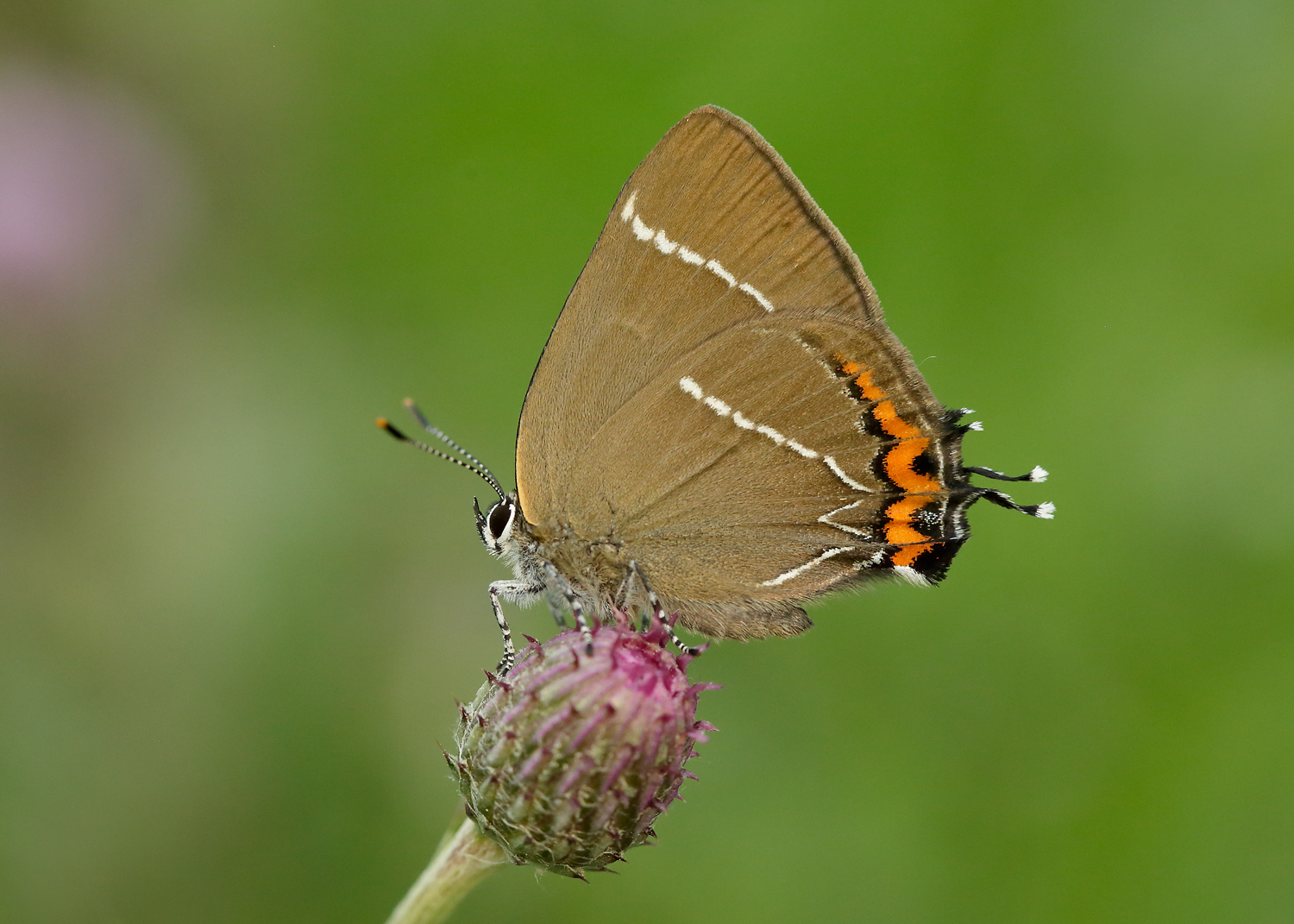
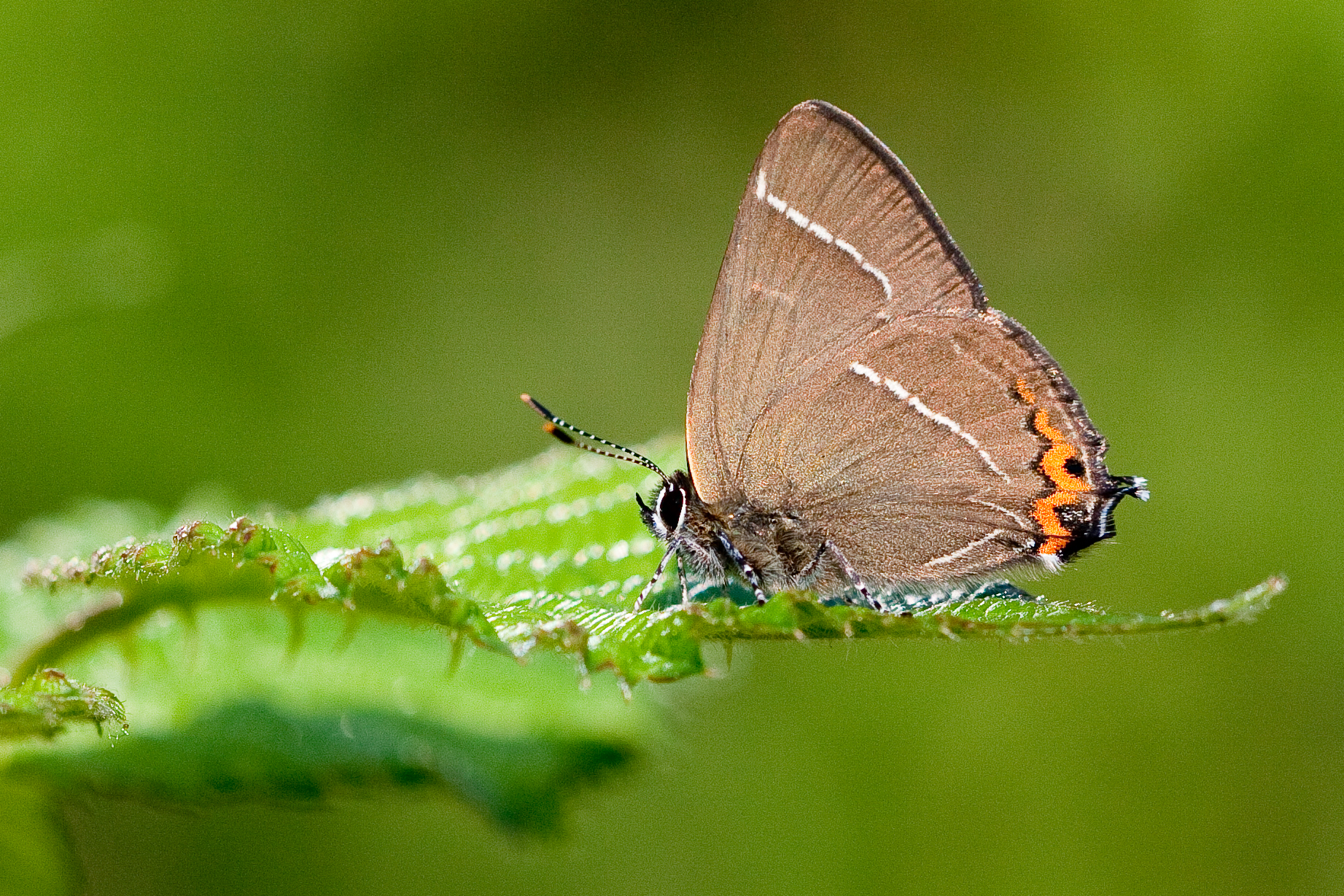
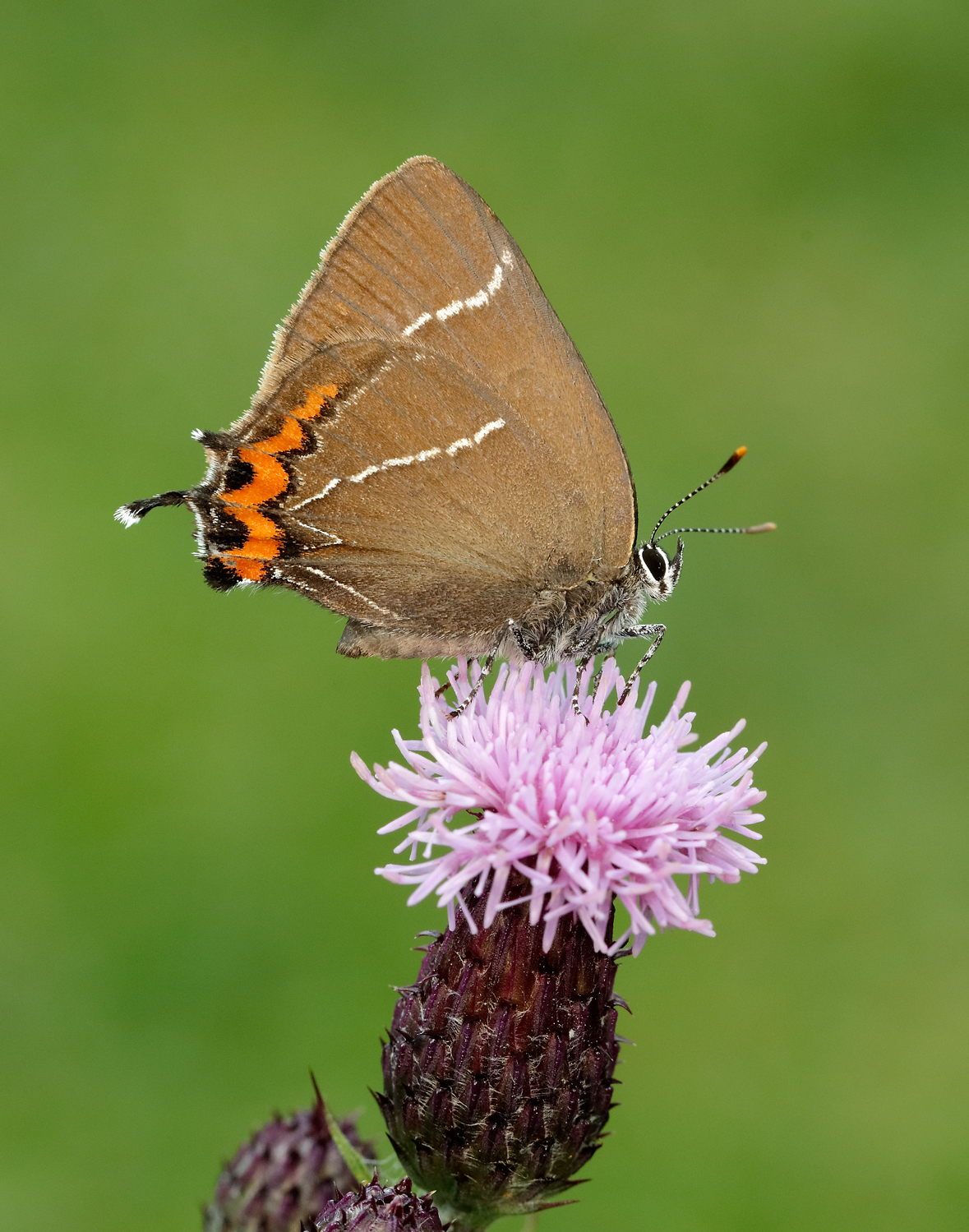
Satyrium w-albumThe White-letter Hairstreak is an elusive butterfly that spends much of its time high in tree canopies, especially around elm trees. Their brown wings feature a flash of orange near the tails and a distinctive white ‘W’ marking underneath. These tail-like extensions help misdirect predators by mimicking a false head. Their caterpillars are masters of disguise, changing appearance as they grow to match elm flowers, buds and leaves. Found across England, Wales and southern Scotland, they are gradually expanding northwards, making them an exciting species on the rise.

Masters of disguise, and venturing north
Starting off as eggs which look like little flying saucers, White-letter Hairstreaks rely on woodland with elms to complete their lifecycle.
The caterpillars are beautifully adapted for elm trees. As they grow, they change their appearance to blend in first with elm flowers, then a developing leaf bud, and finally the elm leaf itself.
Their disguise doesn’t end there, though. The ‘tails’ on their wings serve an important purpose – they mimic antennae, which make it look like the butterfly’s head is at the back and encourages attacks from predators there, where the harm is likely to be less severe.
You can find this butterfly scattered across England, Wales, and southern Scotland. It’s heading north at a fair lick, too – having first appeared in Scotland nine years ago, it has now reached as far as Dundee.
Vibes
Each butterfly is scored out of 100 across a set of traits, from how bold and visible it is to how far it travels or how particular it is about where it lives. These scores compare each species with the other butterflies in Britain, helping you see their differences at a glance. Here’s what makes the White-letter Hairstreak special.
Bright colours, bold patterns, and a love of the spotlight. Some butterflies just can’t help showing off.
Fast, or throwing some seriously impressive moves, these butterflies are in a flutter.
Always on guard, ready to hide or defend - these butterflies have self-preservation down to an art.
It’s ok to be a little… well, weird. These butterflies have been certified with the freak factor.
Like Goldilocks, everything has to be just right for these perfectionists.
Hard to spot and even harder to forget, these butterflies are a true one of a kind.
Bold, curious, and ready to explore, these brave butterflies live for the thrill and aren’t afraid to travel.
Weather-resistant, battle-hardened, and built to survive, these butterflies know how to take it on the wing.
White-letter Hairstreak caterpillars change appearance as they grow to perfectly match elm flowers, buds and leaves.
Test your knowledge
What gives the White-letter Hairstreak its name?The butterfly is named after the distinctive white 'W' marking on the underside of its wings.


Voting has now closed