Swallowtail
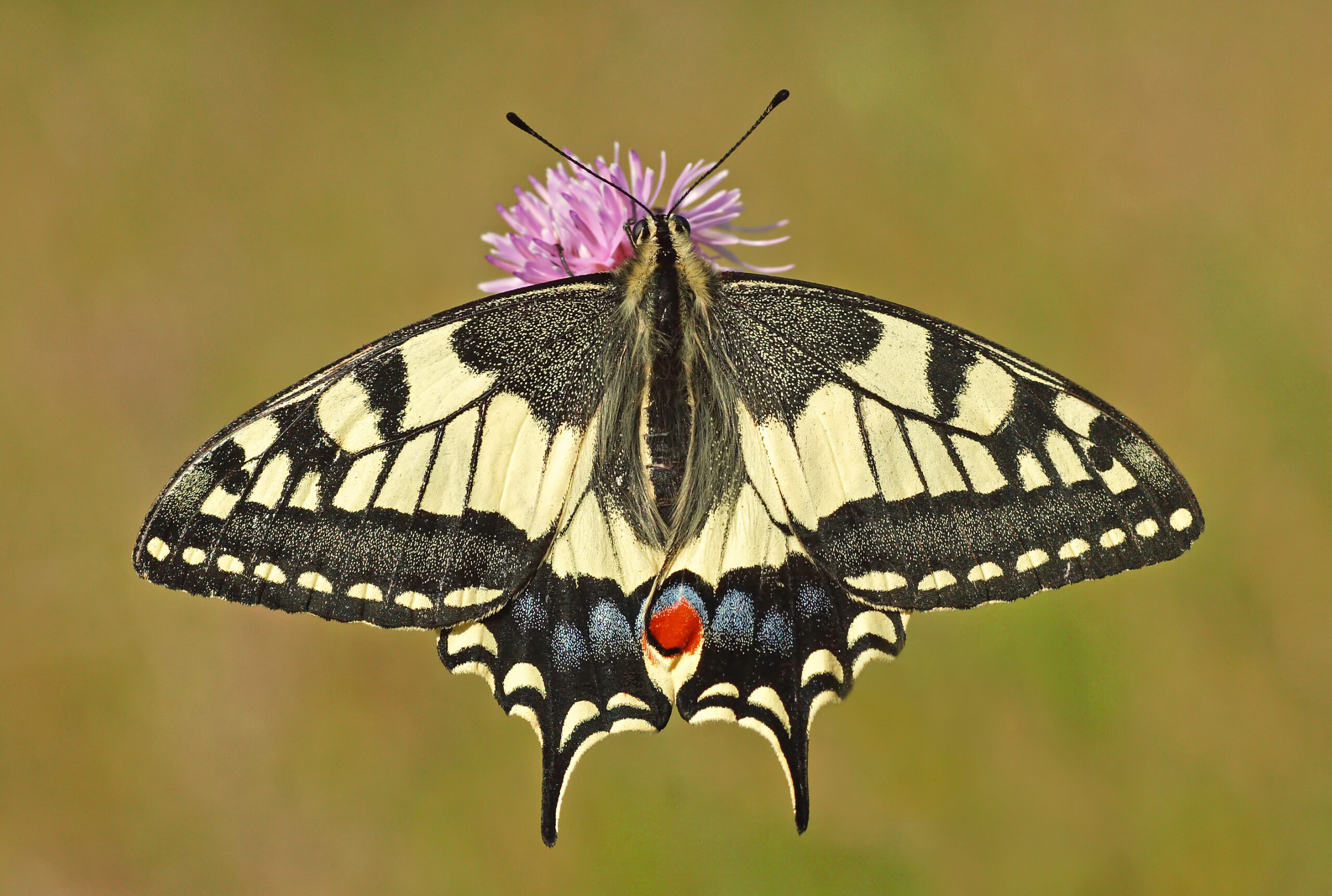
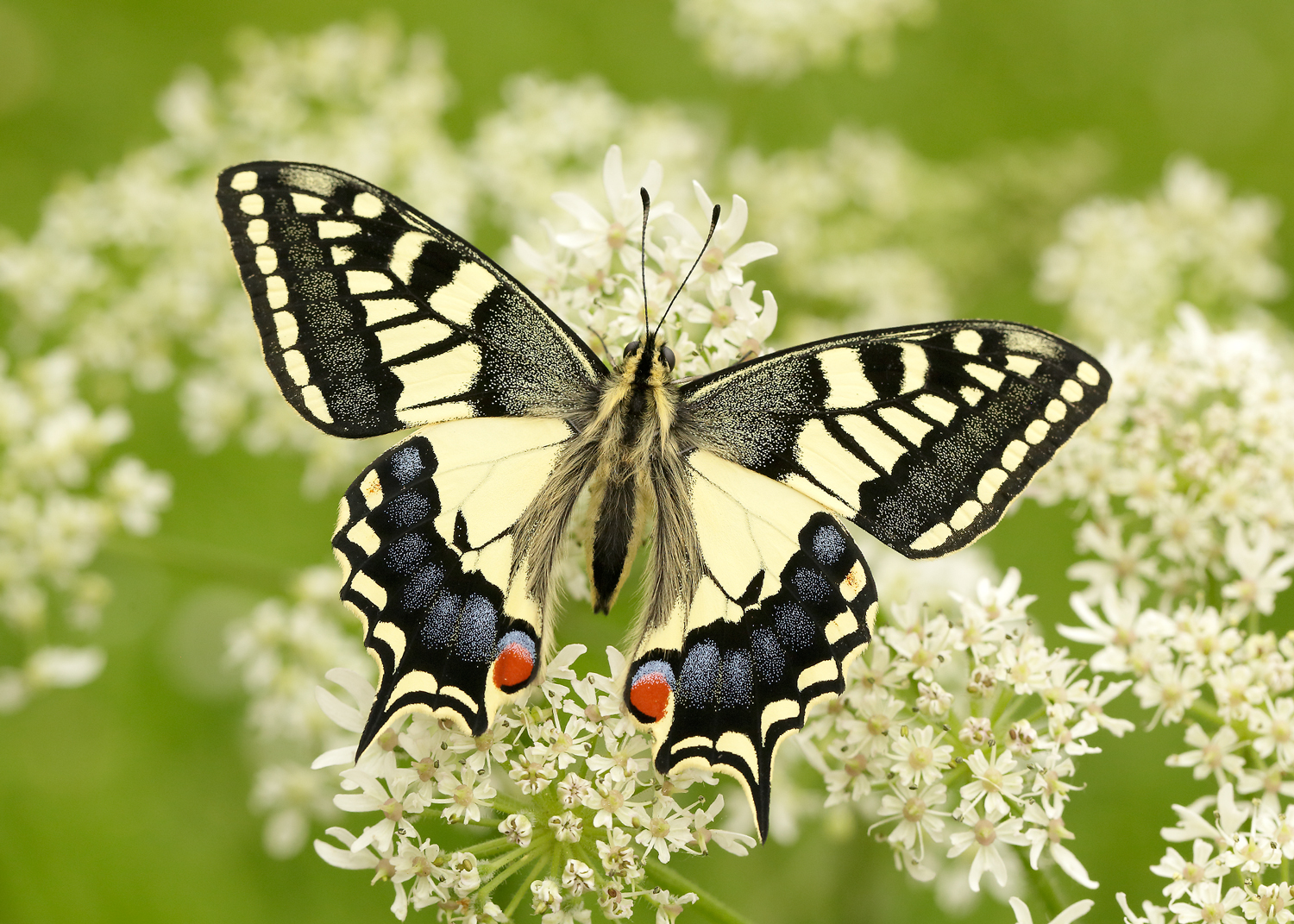
Papilio machaonThe Swallowtail is Britain’s largest native butterfly, instantly recognisable by its striking black-and-yellow wings and elegant tail-like extensions. They are a rare butterfly, found only in the Norfolk Broads, where they glide powerfully over open fens. Their caterpillars are bright green with bold black markings and orange ‘horns’, capable of releasing a strong, foul pineapple-like smell when threatened.

Britain’s biggest butterfly, but is it the best?
The spectacular Swallowtail soars powerfully over open fens, stopping to feed on thistles and Ragged-Robin, or to lay eggs on the only plant its caterpillars will eat – Milk-parsley.
The adults like to beat their wings when feeding – a beautiful nightmare for wildlife photographers.
Its caterpillars are just as mesmerising – and have an organ near their head which emits a strong, acrid smell like rotten pineapple when threatened.
This rare beauty over-winters in its chrysalis before emerging in late spring or early summer, drying its wings in the safety of the reedbeds before imposing itself on the Norfolk sky.
Its swallow-like tails mimic antennae. Together with its red and blue ‘false eyes’, they’re designed to paint a confusing picture of some of two-headed butterfly to any would-be predator.
A true spectacle, they are one of the UK’s most sought-after butterfly sightings.


Vibes
Each butterfly is scored out of 100 across a set of traits, from how bold and visible it is to how far it travels or how particular it is about where it lives. These scores compare each species with the other butterflies in Britain, helping you see their differences at a glance. Here’s what makes the Swallowtail special.
Bright colours, bold patterns, and a love of the spotlight. Some butterflies just can’t help showing off.
Fast, or throwing some seriously impressive moves, these butterflies are in a flutter.
Always on guard, ready to hide or defend - these butterflies have self-preservation down to an art.
It’s ok to be a little… well, weird. These butterflies have been certified with the freak factor.
Like Goldilocks, everything has to be just right for these perfectionists.
Hard to spot and even harder to forget, these butterflies are a true one of a kind.
Bold, curious, and ready to explore, these brave butterflies live for the thrill and aren’t afraid to travel.
Weather-resistant, battle-hardened, and built to survive, these butterflies know how to take it on the wing.
Chosen By

I think Swallowtails are absolutely beautiful. I remember drawing them for a school art project before I’d even seen one because they are just so appealing: the way their bold, black patterns contrast with the delicate cream colour, topped off with a tiny bit of blue and those striking red spots. They are a work of art! It took a bit of searching to actually see my first one – I remember going to the Norfolk Broads to try and spot them, but it always seemed to be too windy or not quite warm enough. Eventually, I was fortunate to enjoy some incredible sightings, made all the more satisfying by all the searching and hoping. But it’s such a shame that these stunning, gorgeous creatures are declining.
Swallowtail caterpillars can release a strong smell like rotten pineapple when they feel threatened.
Test your knowledge
Where in the UK can Swallowtails be found?Swallowtails are only found in the Norfolk Broads, making them one of the UK’s most localised butterflies.


Voting has now closed