

Small Blue
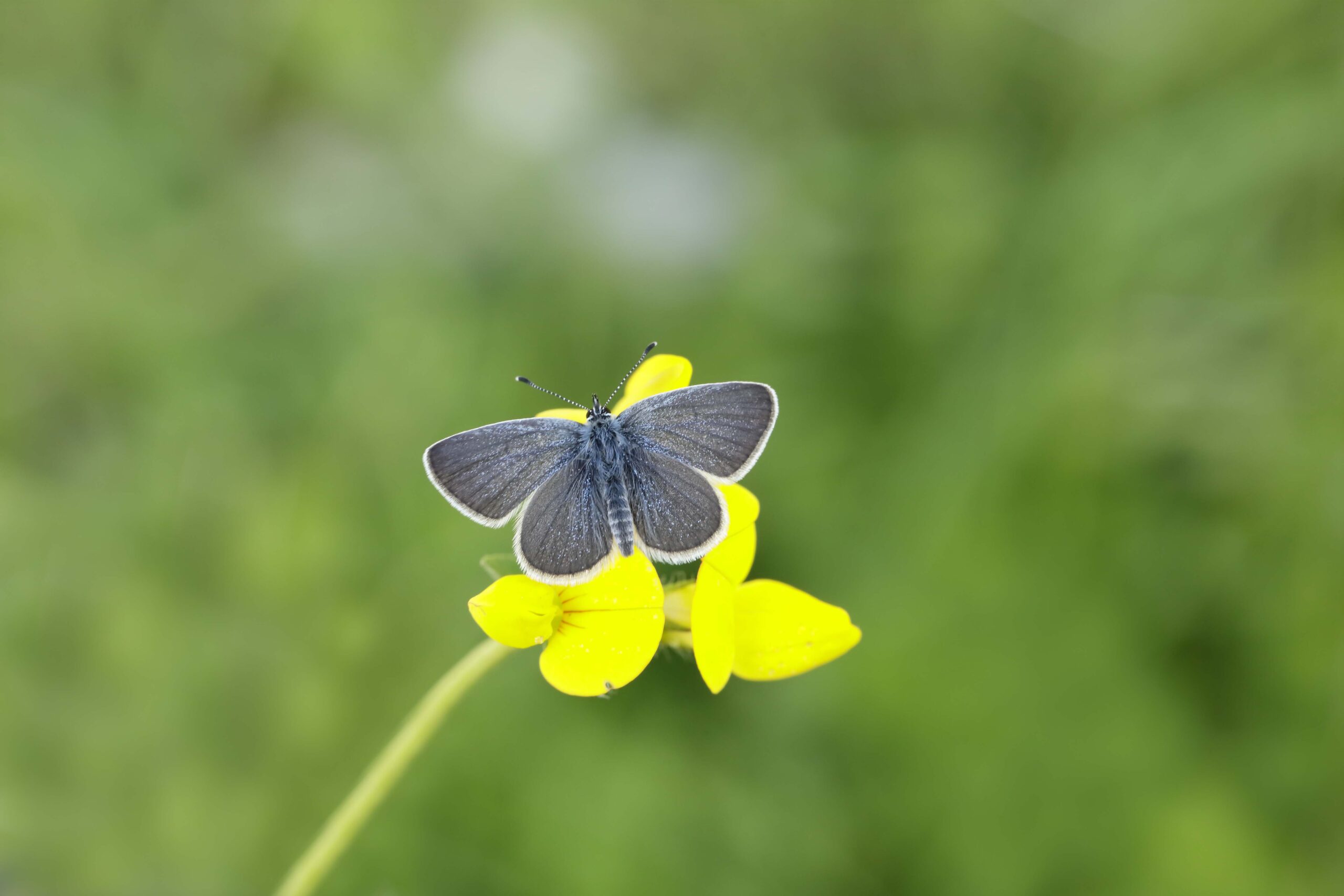
Cupido minimusThe Small Blue is the UK’s tiniest butterfly, barely larger than your fingernail. Their dusky blue wings and pale undersides make for a subtle but charming sight in chalk and limestone grasslands. They are highly social as adults, often basking and roosting in small groups, but their caterpillars are far less friendly. Feeding exclusively on Kidney Vetch, they develop inside flowerheads and have been known to cannibalise one another. Adult females will mark plants with their scent to deter rivals. Rare and localised, they are found in scattered colonies across southern and central parts of the UK.

Tiny, lovely, lethal
With easily the cutest latin name of any UK butterfly, the Small Blue, or Cupido minimus, may not be as vibrant in colour as some of its blue cousins, but it makes up for it with plenty of… personality.
Living in colonies, the Small Blue is a highly sociable adult butterfly. They can often be found basking and feeding in small groups and roosting together at night.
This penchant for spending time together, though, is very much something they develop later in life…
Their caterpillars will only eat Kidney Vetch. They burrow into flowerheads to feed, live and, if necessary, defend their territory by eating one of their younger relatives.
In an apparent attempt to keep these fine young cannibals apart, female Small Blues rub a scent on the flower where they’ve laid their eggs to deter others from laying in the same spot.
Find the Small Blue amongst chalk and limestone grasslands, coastal areas, quarries and in gravel pits. They are rare, but scattered far and wide, with colonies across southern and central England, the south coast of Wales, eastern Scottish coasts, and western Northern Ireland.


Vibes
Each butterfly is scored out of 100 across a set of traits, from how bold and visible it is to how far it travels or how particular it is about where it lives. These scores compare each species with the other butterflies in Britain, helping you see their differences at a glance. Here’s what makes the Small Blue special.
Bright colours, bold patterns, and a love of the spotlight. Some butterflies just can’t help showing off.
Fast, or throwing some seriously impressive moves, these butterflies are in a flutter.
Always on guard, ready to hide or defend - these butterflies have self-preservation down to an art.
It’s ok to be a little… well, weird. These butterflies have been certified with the freak factor.
Like Goldilocks, everything has to be just right for these perfectionists.
Hard to spot and even harder to forget, these butterflies are a true one of a kind.
Bold, curious, and ready to explore, these brave butterflies live for the thrill and aren’t afraid to travel.
Weather-resistant, battle-hardened, and built to survive, these butterflies know how to take it on the wing.
Small Blue females mark flowers with scent to warn off other egg-laying females and reduce competition for their caterpillars.
Test your knowledge
What unusual behaviour is seen in Small Blue caterpillars?Small Blue caterpillars may eat other caterpillars, especially younger ones, when sharing the same flowerhead.


Voting has now closed