

Silver-washed Fritillary
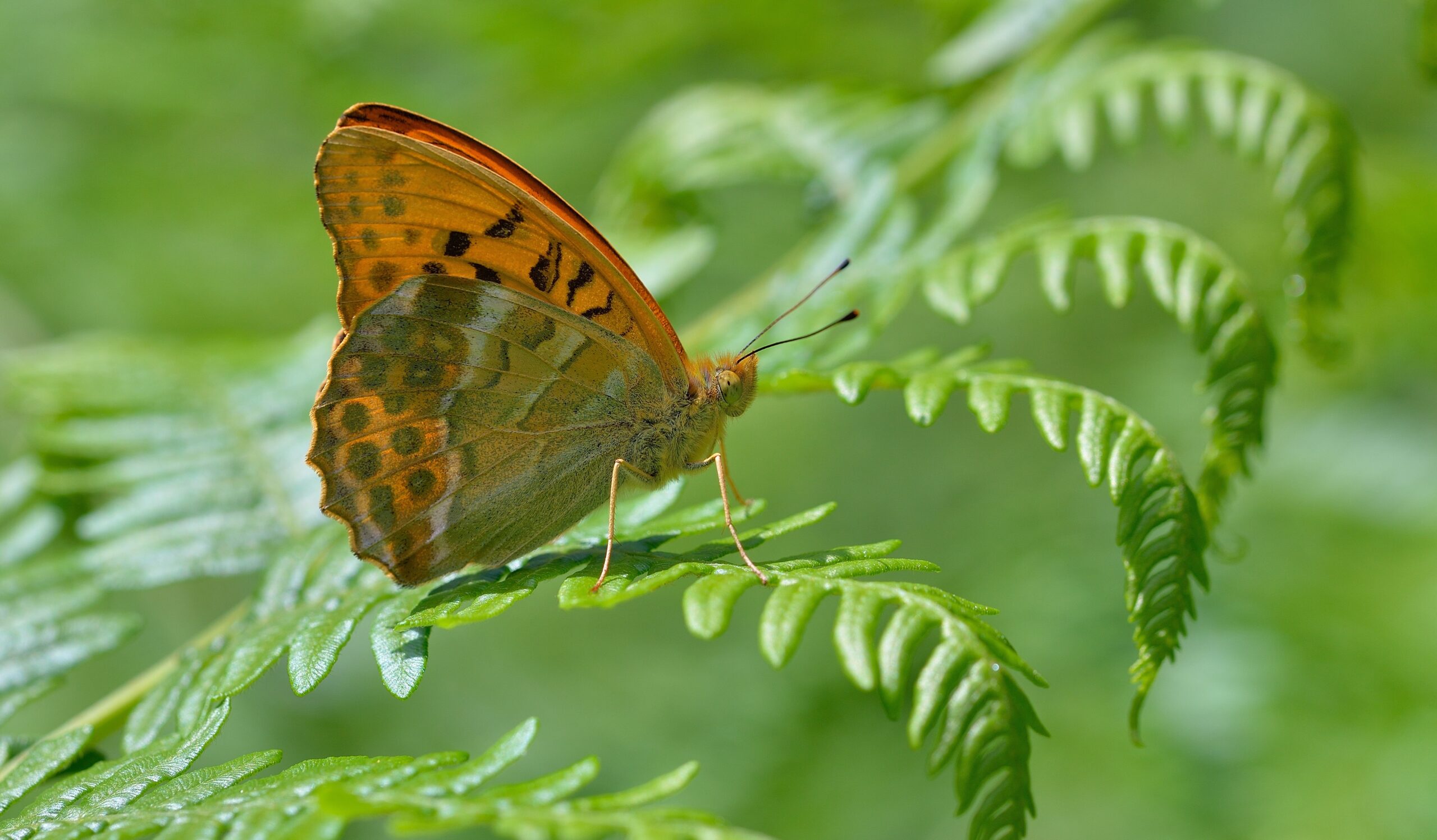
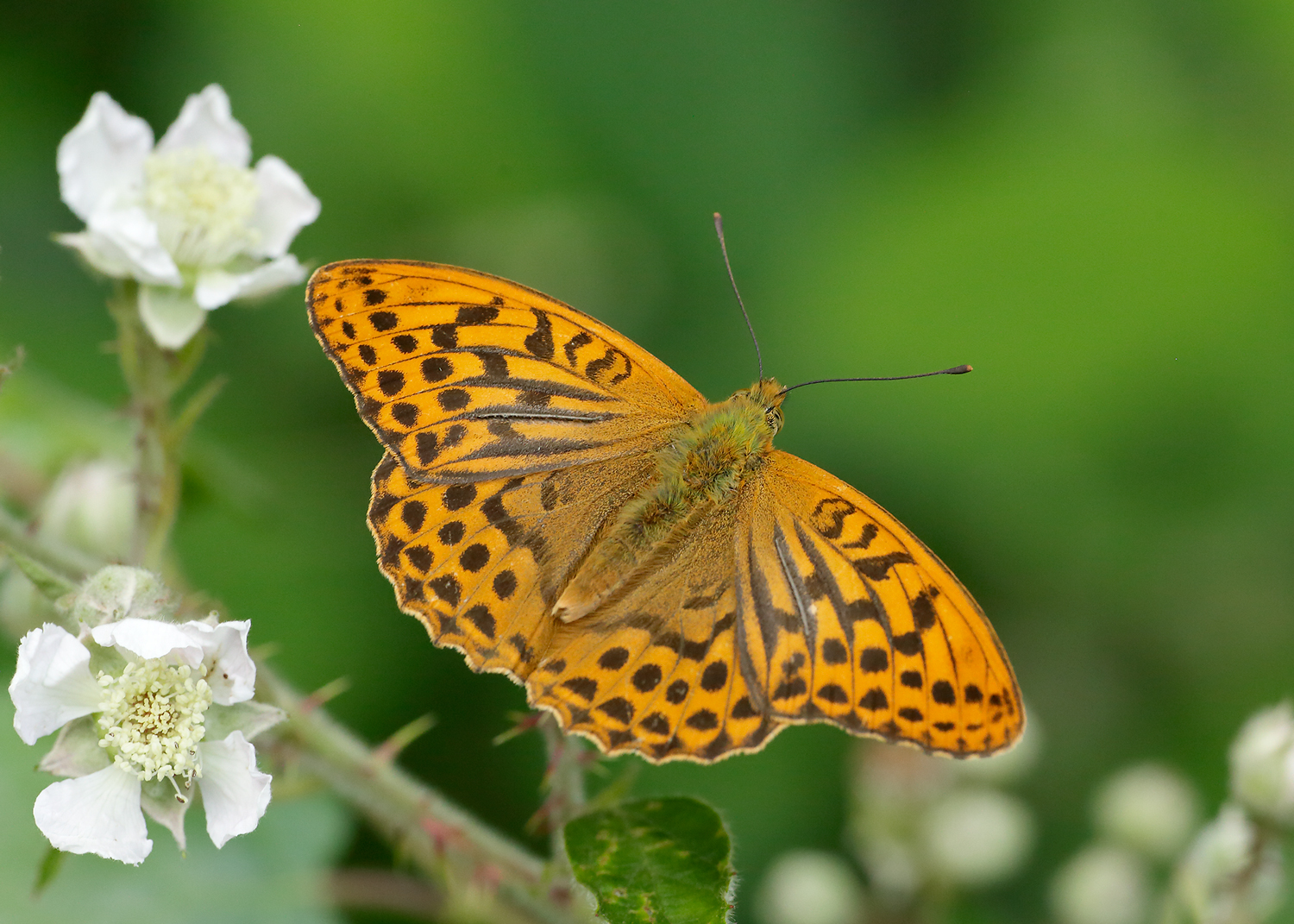
Argynnis paphiaThe Silver-washed Fritillary is the UK’s largest fritillary. A powerful and graceful butterfly, it glides through sunlit woodlands, catching the rays on bright orange upperwings marked with black, while its underwings shimmer with silver and green. They spend time both in the canopy feeding on honeydew and lower down on flowers like Bramble and thistles. Unusually, females lay eggs away from foodplants, leaving caterpillars to find their own way.

Britain’s biggest fritillary
The powerful bright orange and black wings of the Silver-washed Fritillary add a beautiful splash of colour to a woodland scene, but they don’t all have them – there’s a special form of the female that has more subtle bronze-green wings instead, although they are equally stunning.
Although it spends some of its time high up in the trees looking for aphid honeydew to eat, the Silver-washed Fritillary does come down to nectar on a variety of flowers like Bramble and thistles.
Silver-washed mothers like their caterpillars to work for their food. Unlike many other species, females often lay eggs away from foodplants on tree trunks and other plants. After hatching, the caterpillars have to make their own way to their foodplants, their favourite being Common Dog Violet.
This woodland beauty retreats to the shade to mate – although wooing a partner is no simple feat. The female butterfly flies in a straight line while the male loops around her, showering her with pheromones from special scent scales.
You can find this big butterfly in broadleaved woodland, especially where there’s Oak. They’re really common in southern and central England, and you’ll find them scattered in Wales and Northern Ireland, too.

Vibes
Each butterfly is scored out of 100 across a set of traits, from how bold and visible it is to how far it travels or how particular it is about where it lives. These scores compare each species with the other butterflies in Britain, helping you see their differences at a glance. Here’s what makes the Silver-washed Fritillary special.
Bright colours, bold patterns, and a love of the spotlight. Some butterflies just can’t help showing off.
Fast, or throwing some seriously impressive moves, these butterflies are in a flutter.
Always on guard, ready to hide or defend - these butterflies have self-preservation down to an art.
It’s ok to be a little… well, weird. These butterflies have been certified with the freak factor.
Like Goldilocks, everything has to be just right for these perfectionists.
Hard to spot and even harder to forget, these butterflies are a true one of a kind.
Bold, curious, and ready to explore, these brave butterflies live for the thrill and aren’t afraid to travel.
Weather-resistant, battle-hardened, and built to survive, these butterflies know how to take it on the wing.
Male Silver-washed Fritillaries court females by looping around them and releasing pheromones from special scent scales.
Test your knowledge
What is unusual about how Silver-washed Fritillaries lay their eggs?Females lay eggs away from foodplants, so caterpillars must find their food after hatching.


Voting has now closed