Marsh Fritillary
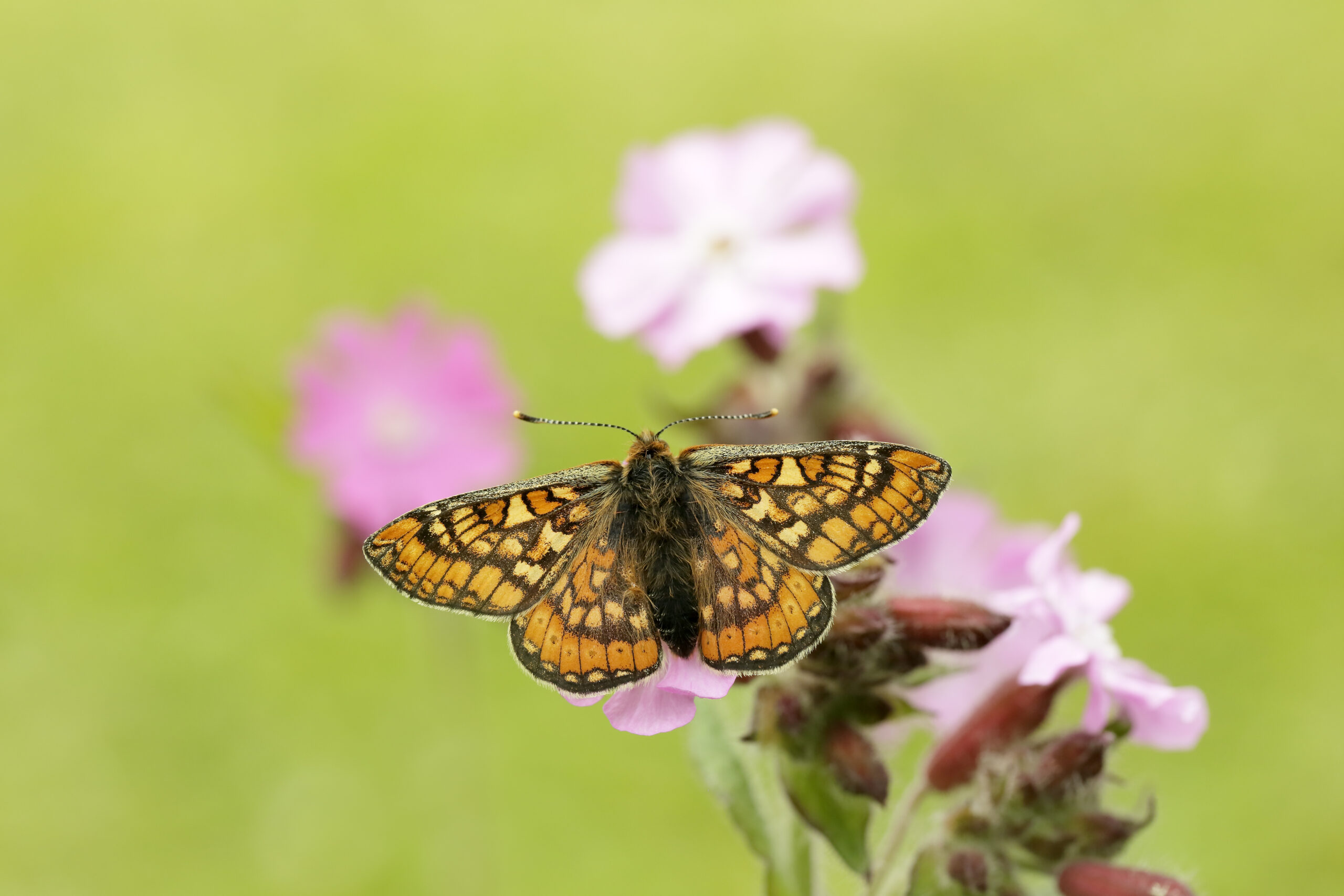
Euphydryas auriniaThe Marsh Fritillary is one of the UK’s most brightly patterned fritillaries, thriving in damp grasslands and marshy habitats. Despite their soggy surroundings, they are bold and territorial, feeding on nectar and relying on the unusual Devil’s-bit Scabious as their caterpillar foodplant. Their caterpillars are spiky and live communally in silken webs, which are even used by scientists to monitor populations. Known for dramatic boom-and-bust cycles, they can be abundant one year and scarce the next.

A bright butterfly in a soggy situation
The brightest of the beautifully patterned fritillaries, the Marsh Fritillary doesn’t let its soggy situation bring it down.
As the name suggests, Marsh Fritillaries tend to like damp areas where they can feast on lots of nectar, vigorously defend their territories, and find their caterpillars’ favourite foodplant – the enigmatically-named Devil’s-bit Scabious.
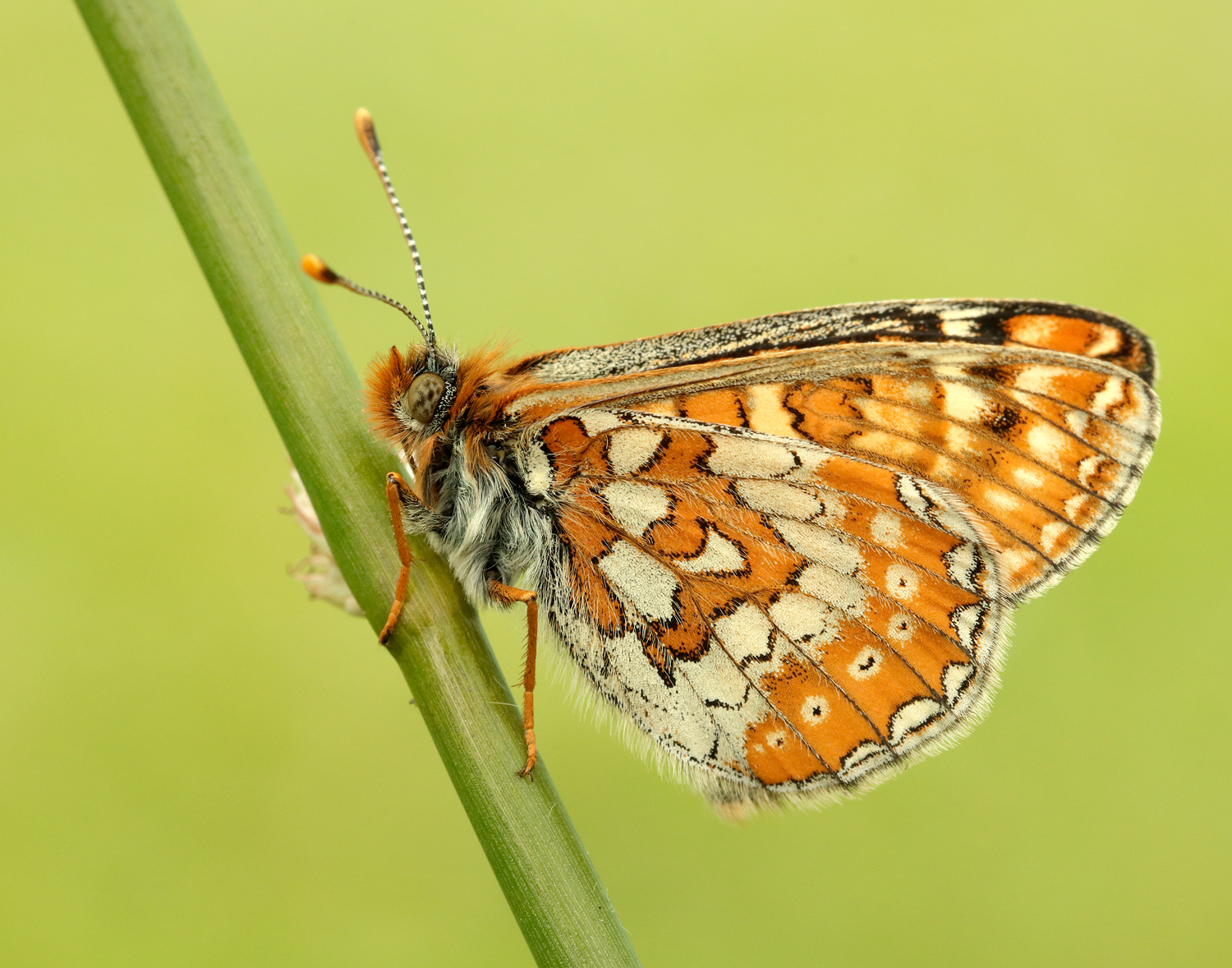
This butterfly has been nicknamed the not so complimentary ‘Greasey Fritillaria’ because of the sheen it has on its wings when it loses some scales, which is common as they age.
Their caterpillars have a spiky appearance which helps keep predators at bay – especially when they jerk from side to side in unison. Together, they live communally in silken webs, and Butterfly Conservation scientists count the webs to see how the butterfly is doing.
The Marsh Fritillary is famous for its dramatic population ‘boom and bust’ cycles—some years it’s spreading its wings and colonising new areas, and others it’s almost impossible to find.
If you do want to spot one, they’re mostly restricted to the west of the UK, including Wales, southwest England, Scotland and parts of Northern Ireland. Though, there are small populations in Lincolnshire. They’ll be in damp grassland and marshy areas, short coastal grasslands, and chalk grasslands.


Vibes
Each butterfly is scored out of 100 across a set of traits, from how bold and visible it is to how far it travels or how particular it is about where it lives. These scores compare each species with the other butterflies in Britain, helping you see their differences at a glance. Here’s what makes the Marsh Fritillary special.
Bright colours, bold patterns, and a love of the spotlight. Some butterflies just can’t help showing off.
Fast, or throwing some seriously impressive moves, these butterflies are in a flutter.
Always on guard, ready to hide or defend - these butterflies have self-preservation down to an art.
It’s ok to be a little… well, weird. These butterflies have been certified with the freak factor.
Like Goldilocks, everything has to be just right for these perfectionists.
Hard to spot and even harder to forget, these butterflies are a true one of a kind.
Bold, curious, and ready to explore, these brave butterflies live for the thrill and aren’t afraid to travel.
Weather-resistant, battle-hardened, and built to survive, these butterflies know how to take it on the wing.
Marsh Fritillaries are nicknamed the “Greasy Fritillary” because older butterflies can look shiny as they lose wing scales.
Test your knowledge
How are Marsh Fritillary populations monitored by scientists?Scientists track Marsh Fritillary populations by counting the communal silken webs made by their caterpillars.


Voting has now closed