
High Brown Fritillary
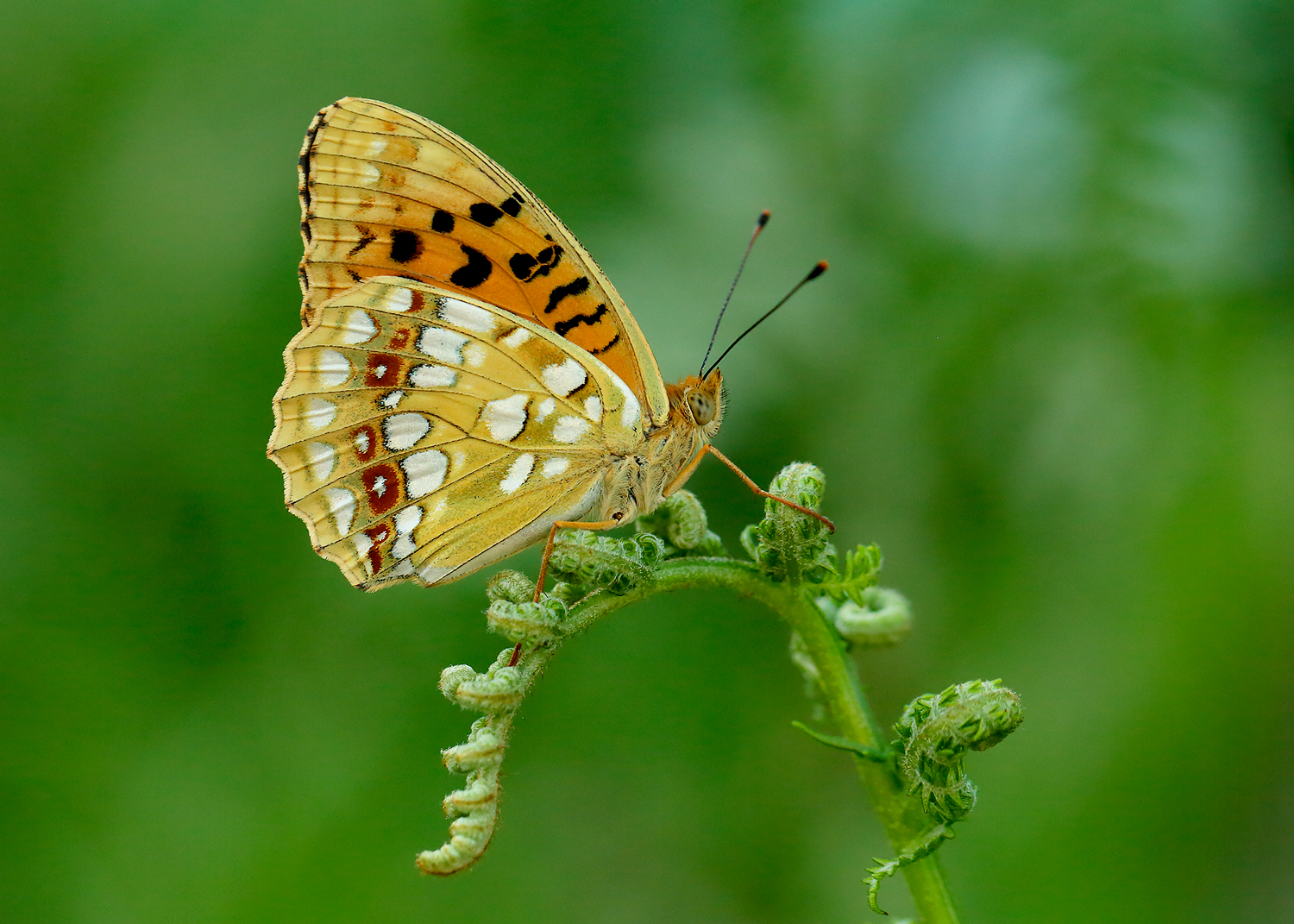
Fabriciana adippeThe High Brown Fritillary is Britain’s most endangered butterfly, now found only in small areas of the west of England and South Wales. This large, fast-flying species flashes bright orange wings over bracken-covered hillsides in search of nectar. Though similar to the Dark Green Fritillary, they can be identified by the orange-ringed spots on their underwings. Their caterpillars feed on violets and bask in the sun to help them grow. Adults are surprisingly wide-ranging, travelling up to 2km from their colony, but their numbers have declined sharply since the 1950s.

Britain’s most endangered butterfly
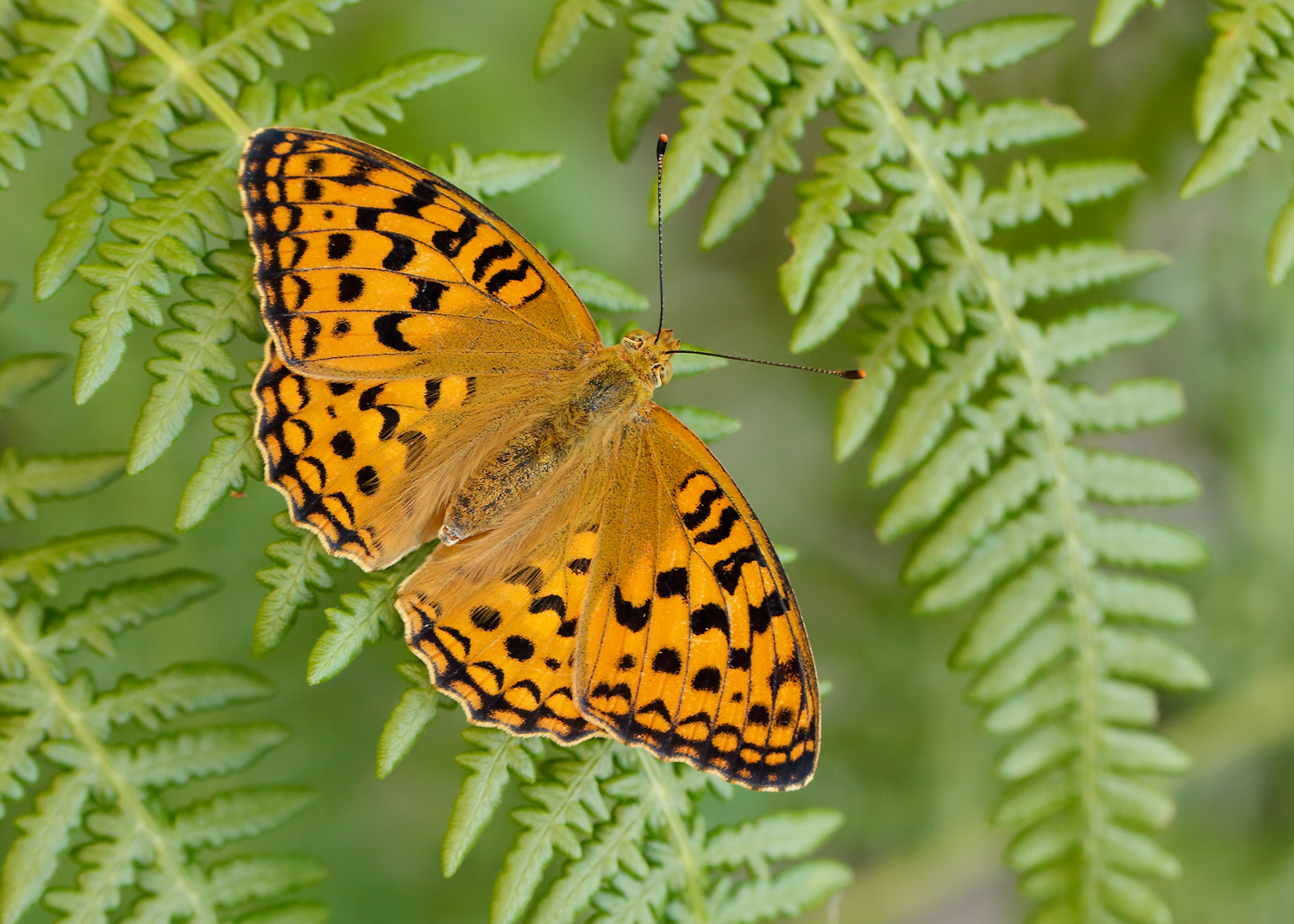
This large, bold fritillary is a fast flier, its bright orange wings flashing over bracken-covered hillsides and limestone outcrops as it looks for flowers like thistles and Bramble to nectar on.
Although strikingly similar to the Dark Green Fritillary, and sharing similar habitats, you can tell them apart by looking at the underwings, where you’ll find the High Brown’s orange-ringed pearls.
Their chrysalises look like shrivelled up leaves – a helpful hillside camouflage to hide it from predators. When they hatch, High Brown Fritillary caterpillars love to sunbathe. Basking in the sun raises the caterpillars’ body temperatures and boosts their growth in spring.
Typically, their caterpillars will feed on violets and encouraging their growth is key to creating precious High Brown habitat. Adults, though, will nectar on a variety of flowers and have been known to travel up to 2km from their colony for a good meal.
Once widespread, their population has massively declined since the 1950s, giving them the unwanted title of Britain’s most endangered butterfly.

Vibes
Each butterfly is scored out of 100 across a set of traits, from how bold and visible it is to how far it travels or how particular it is about where it lives. These scores compare each species with the other butterflies in Britain, helping you see their differences at a glance. Here’s what makes the High Brown Fritillary special.
Bright colours, bold patterns, and a love of the spotlight. Some butterflies just can’t help showing off.
Fast, or throwing some seriously impressive moves, these butterflies are in a flutter.
Always on guard, ready to hide or defend - these butterflies have self-preservation down to an art.
It’s ok to be a little… well, weird. These butterflies have been certified with the freak factor.
Like Goldilocks, everything has to be just right for these perfectionists.
Hard to spot and even harder to forget, these butterflies are a true one of a kind.
Bold, curious, and ready to explore, these brave butterflies live for the thrill and aren’t afraid to travel.
Weather-resistant, battle-hardened, and built to survive, these butterflies know how to take it on the wing.
Its chrysalis looks like a shrivelled leaf, helping it stay hidden from predators while it develops.
Test your knowledge
What do High Brown Fritillary caterpillars do to help their development?Their caterpillars bask in the sun to raise their body temperature, helping them grow in spring.


Voting has now closed