

Essex Skipper
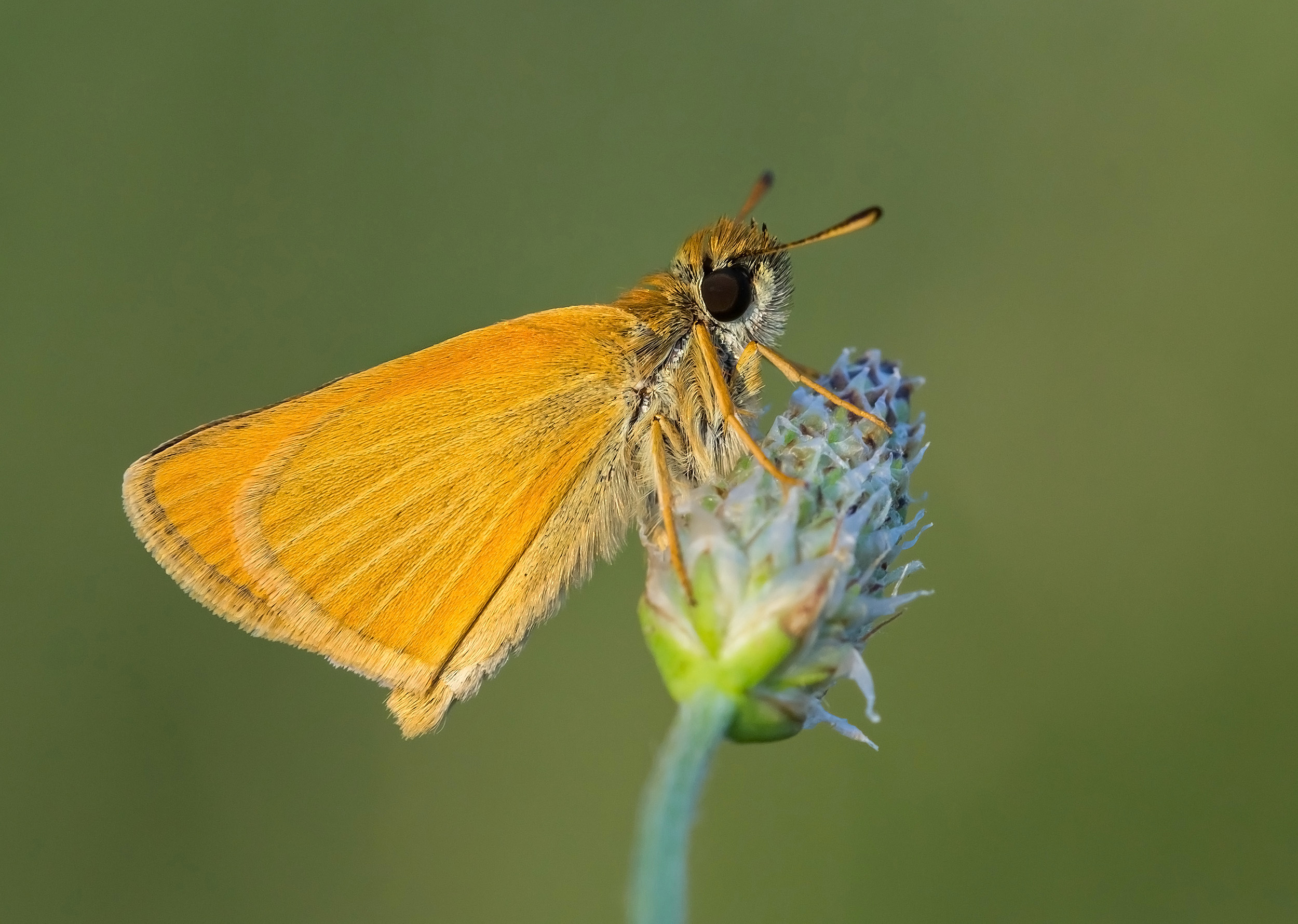
Thymelicus lineolaThe Essex Skipper is a small, golden-orange butterfly, best identified by the black tips on their antennae. These social butterflies enjoy basking together in the evening sun. Adults feed on nectar, while the males will also seek minerals from damp ground. As caterpillars, they feed on grasses, and as eggs are tough enough to survive winter inside the stems.

A golden flutter in the sun
Despite its name, the Essex Skipper is widespread across England and Wales. And, they’re spreading! The territory of the Essex Skipper has more than doubled in the last few decades and they’re heading north. You’ll find them in tall grassland, roadside verges and woodland rides.
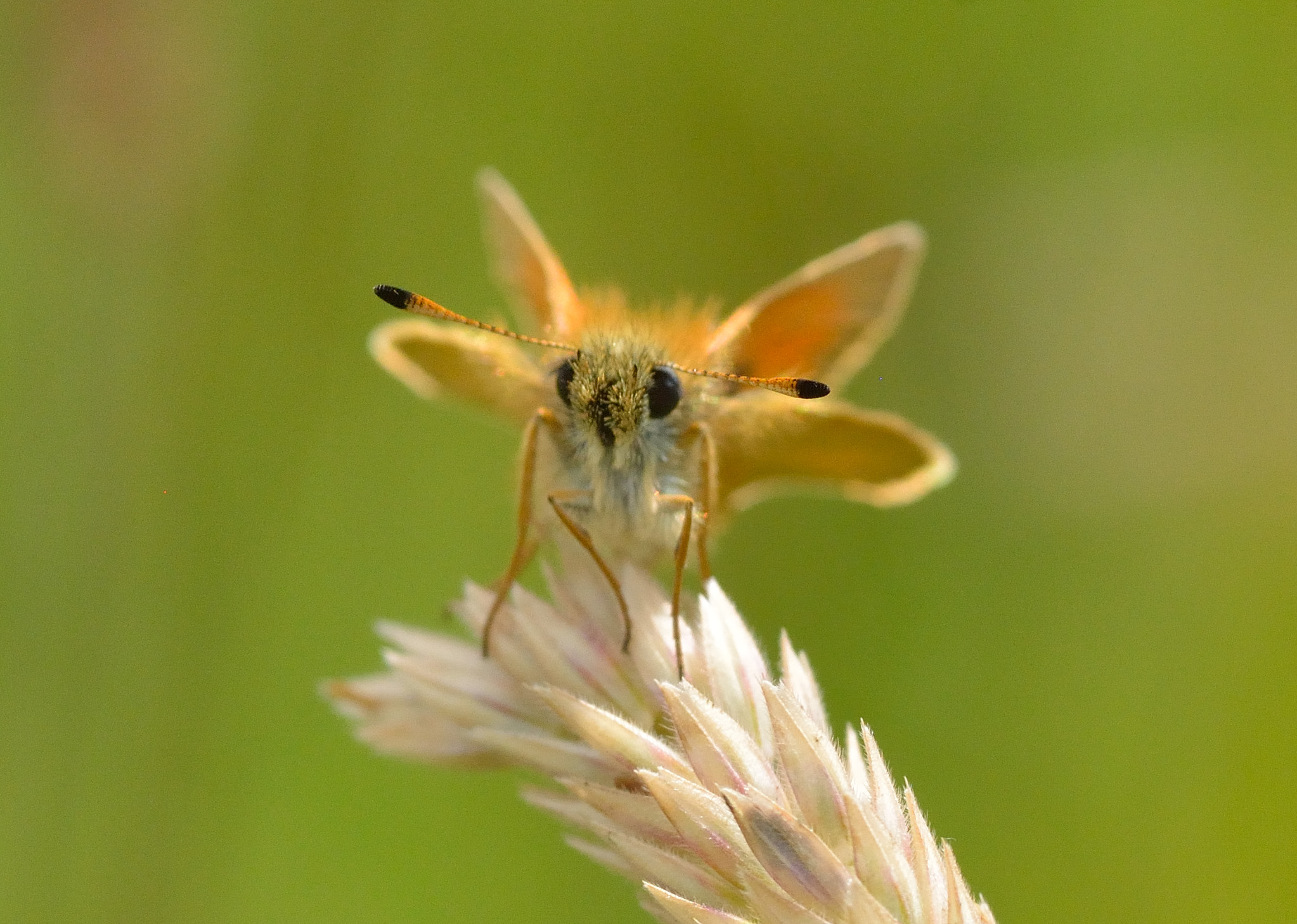
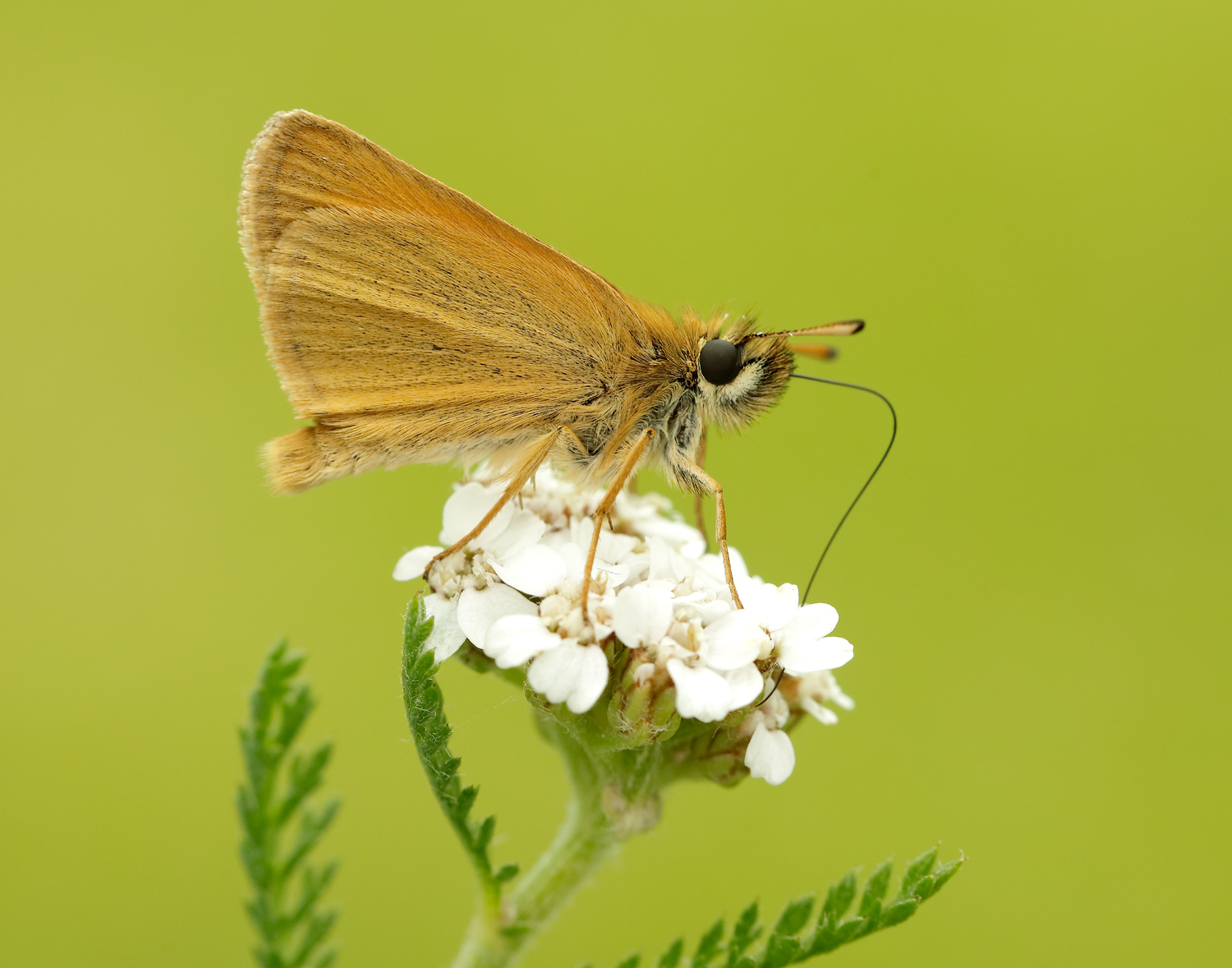
The Essex Skipper looks very similar to the Small Skipper, but there’s an easy trick to tell them apart. Peek at the tips of the antennae – if they’re black, you’ve found one of the Essex variety! Like the other orange skippers in its family, it holds its wings at an angle, making it stand out from other butterfly species.
They’re sociable little butterflies and their favourite group activity is to bask together in the early evening sunshine. They love nectar, of course, but the males will also feed on damp earth and even animal poo! Though, as caterpillars, they prefer Cock’s-foot and other grass species.
The eggs of the Essex Skipper are particularly hardy, having to endure the winter tucked away in a grass stem before the caterpillars hatch in the spring.
Vibes
Each butterfly is scored out of 100 across a set of traits, from how bold and visible it is to how far it travels or how particular it is about where it lives. These scores compare each species with the other butterflies in Britain, helping you see their differences at a glance. Here’s what makes the Essex Skipper special.
Bright colours, bold patterns, and a love of the spotlight. Some butterflies just can’t help showing off.
Fast, or throwing some seriously impressive moves, these butterflies are in a flutter.
Always on guard, ready to hide or defend - these butterflies have self-preservation down to an art.
It’s ok to be a little… well, weird. These butterflies have been certified with the freak factor.
Like Goldilocks, everything has to be just right for these perfectionists.
Hard to spot and even harder to forget, these butterflies are a true one of a kind.
Bold, curious, and ready to explore, these brave butterflies live for the thrill and aren’t afraid to travel.
Weather-resistant, battle-hardened, and built to survive, these butterflies know how to take it on the wing.
You can spot an Essex Skipper by the black tips on their antennae, unlike similar species.
Test your knowledge
What is the easiest way to identify an Essex Skipper?The Essex Skipper can be distinguished from similar species by the black tips on their antennae.


Voting has now closed