

Brimstone
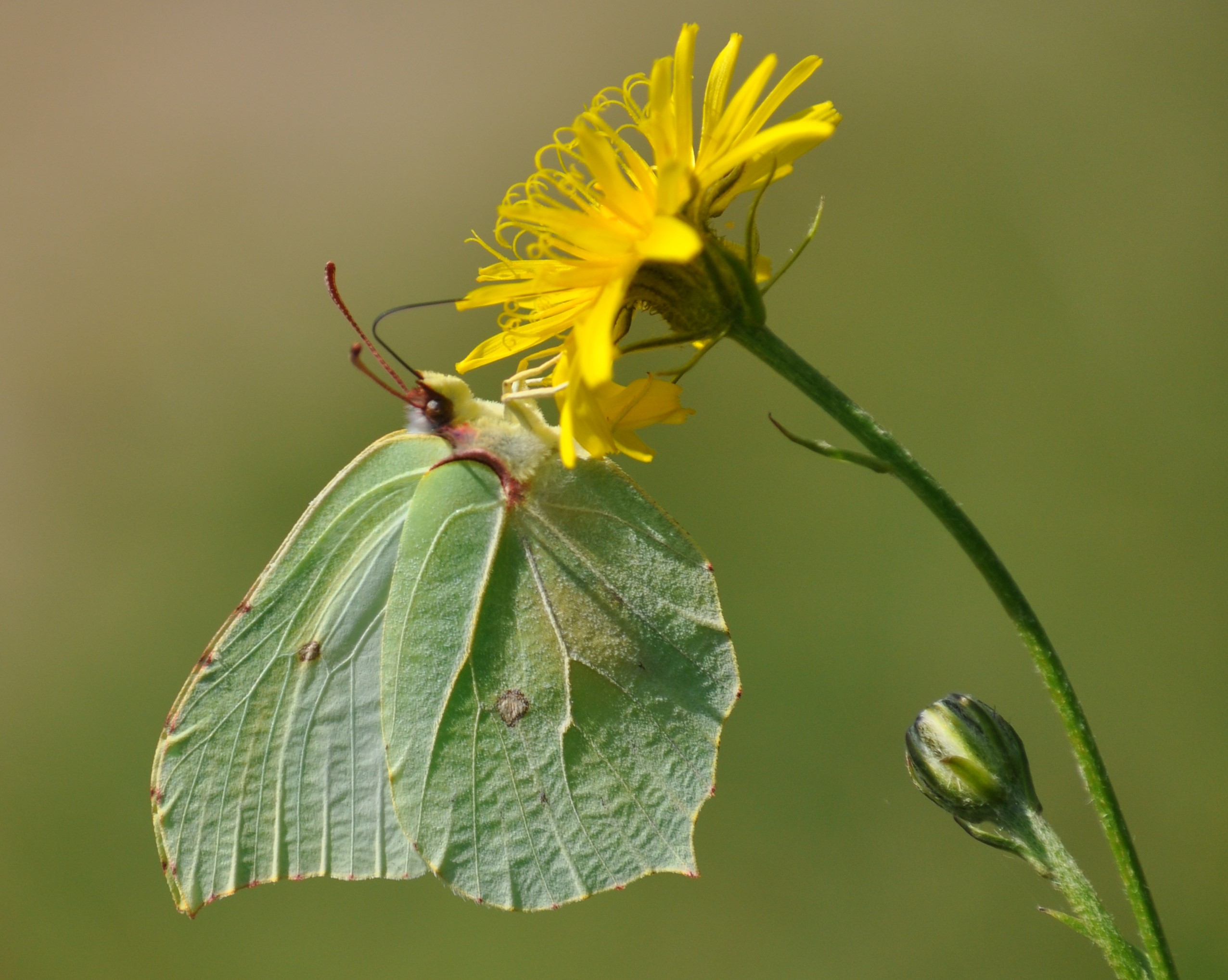
Gonepteryx rhamniA beautiful flash of yellow, this unmistakable butterfly can be spotted from afar as they flit about hedgerows, verges and gardens. There’s a theory that the word 'butterfly' originates from the distinctive yellow colour of male Brimstones, making them a bit of a big name around here.

Putting the butter in butterfly
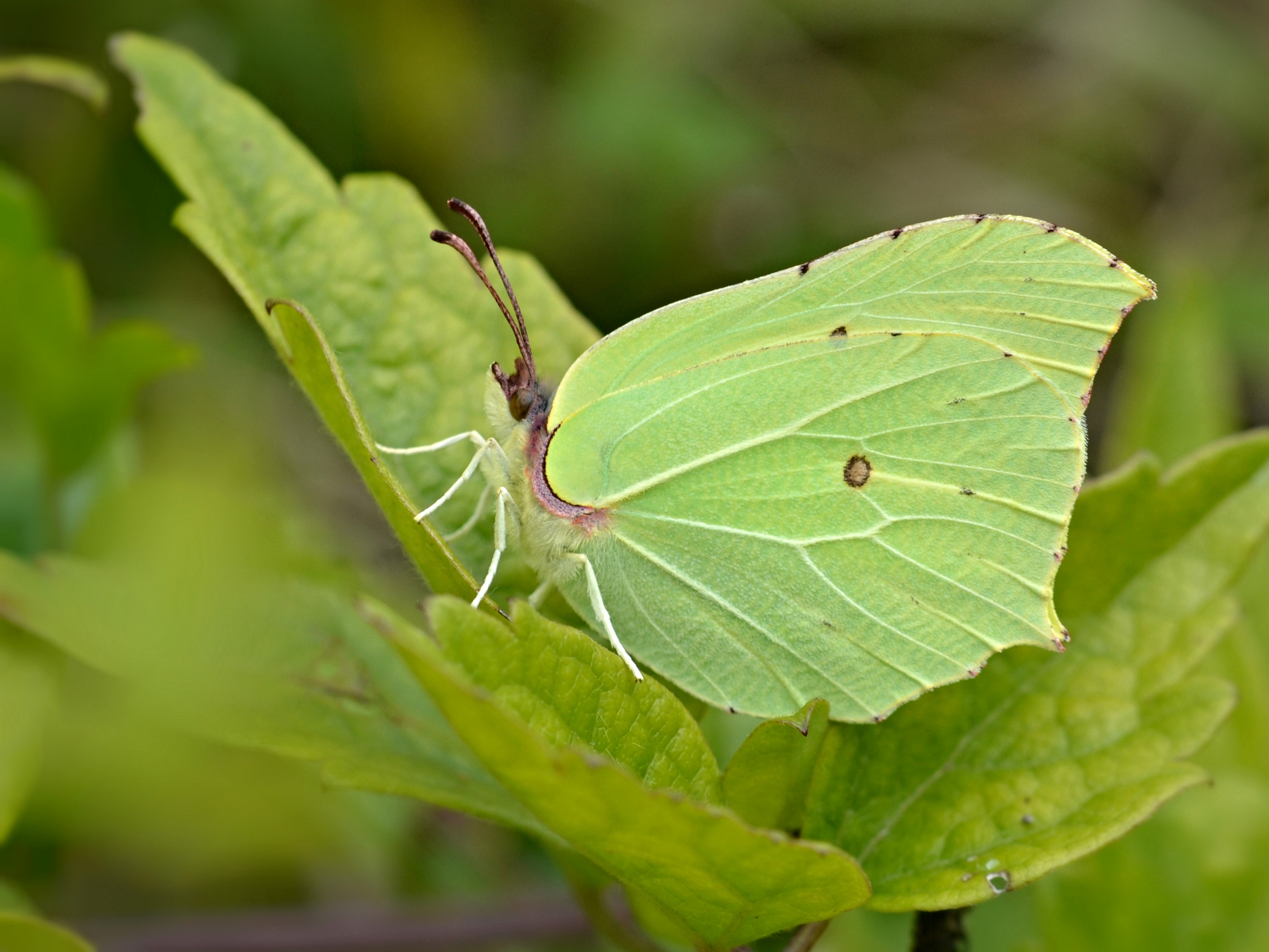
An early sign of spring to come, the distinctive yellow colour of a male Brimstone is enough to brighten a midwinter’s day. The wings of the female, meanwhile, are very pale green, almost white.
The Brimstone has the stature to go with its status, flying in with a wingspan up to 75mm, making it one of Britain’s largest butterflies.
Take a closer look at these big old wings, and you’ll see veins running along their green-y yellow undersides. These create a sneaky disguise among the leaves and help the Brimstone switch from bright, bold extrovert to leaf-cloaked introvert as they blend with their surroundings at rest.
You can find this extraordinary butterfly across much of the UK. Sightings in Scotland and Northern Ireland are a little rare, although, these days, like many ‘southern’ species, the Brimstone is slowly heading north. So keep a lookout in scrubby grassland, woodland, along hedgerows and in your garden.
Incredibly, this butterfly can live up to 12 months as an adult, so can be spotted at almost any time of year. They’ve even adapted to survive cold winter temperatures, using a special sort of ‘antifreeze’ in their bodies.




Vibes
Each butterfly is scored out of 100 across a set of traits, from how bold and visible it is to how far it travels or how particular it is about where it lives. These scores compare each species with the other butterflies in Britain, helping you see their differences at a glance. Here’s what makes the Brimstone special.
Bright colours, bold patterns, and a love of the spotlight. Some butterflies just can’t help showing off.
Fast, or throwing some seriously impressive moves, these butterflies are in a flutter.
Always on guard, ready to hide or defend - these butterflies have self-preservation down to an art.
It’s ok to be a little… well, weird. These butterflies have been certified with the freak factor.
Like Goldilocks, everything has to be just right for these perfectionists.
Hard to spot and even harder to forget, these butterflies are a true one of a kind.
Bold, curious, and ready to explore, these brave butterflies live for the thrill and aren’t afraid to travel.
Weather-resistant, battle-hardened, and built to survive, these butterflies know how to take it on the wing.
Chosen By
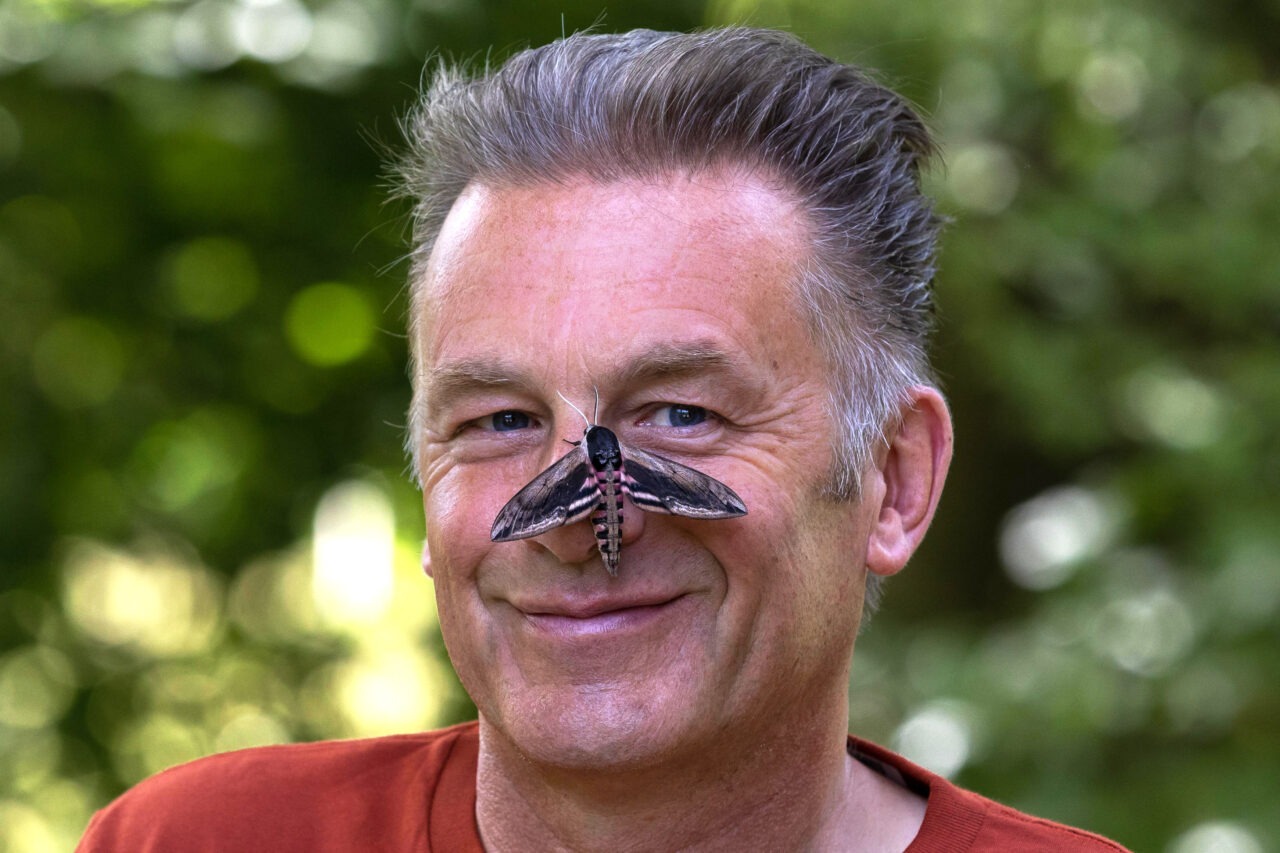
My favourite butterfly is the Brimstone, because it appears early in spring when everything is a bit, well, olive and brown and dull... But then all of a sudden you get this FLASH of yellow bouncing down the hedgerow.
The yellow flash of a Brimstone butterfly is a common sight across England and Wales, and increasingly in Scotland and Northern Ireland.
Test your knowledge
What’s surprising about the Brimstone’s life cycle?Unlike most butterflies, which live only a few weeks as an adult, the Brimstone can survive for up to 12 months. To help during the winter, it uses a natural 'antifreeze' to endure colder temperatures.


Voting has now closed