

Purple Emperor
Apatura irisThe majestic Purple Emperor, found in southern and central England, is rare, big and bold. Males have distinctive purple wings, while females show similar patterns but are brown instead. They live high in the treetops, feeding on honeydew and sap, but occasionally come down to eat… well, poo. Once in decline, the species is showing slight signs of recovery, but remains limited to larger woodlands.

Majestic and rare, a regal butterfly in our skies
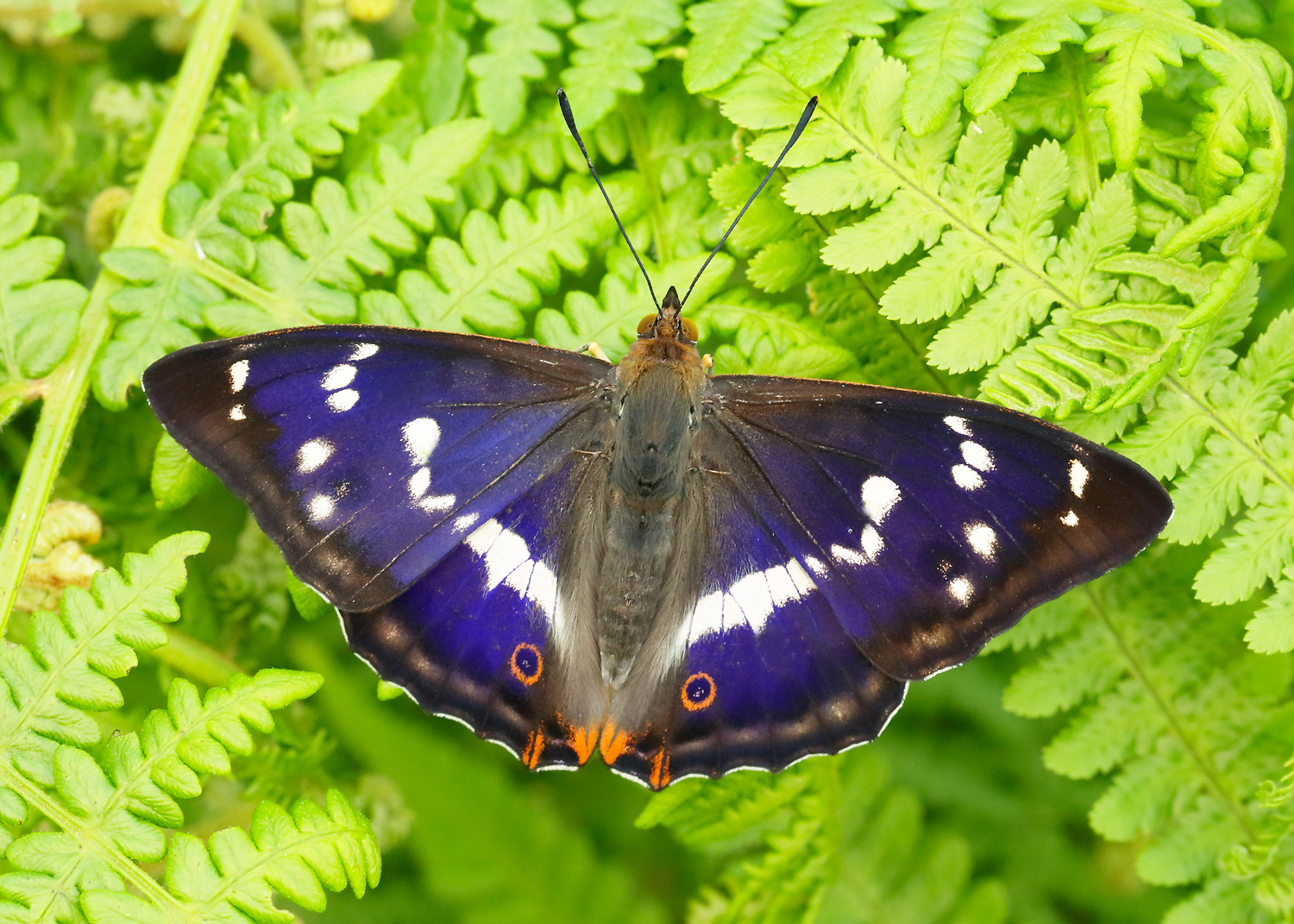
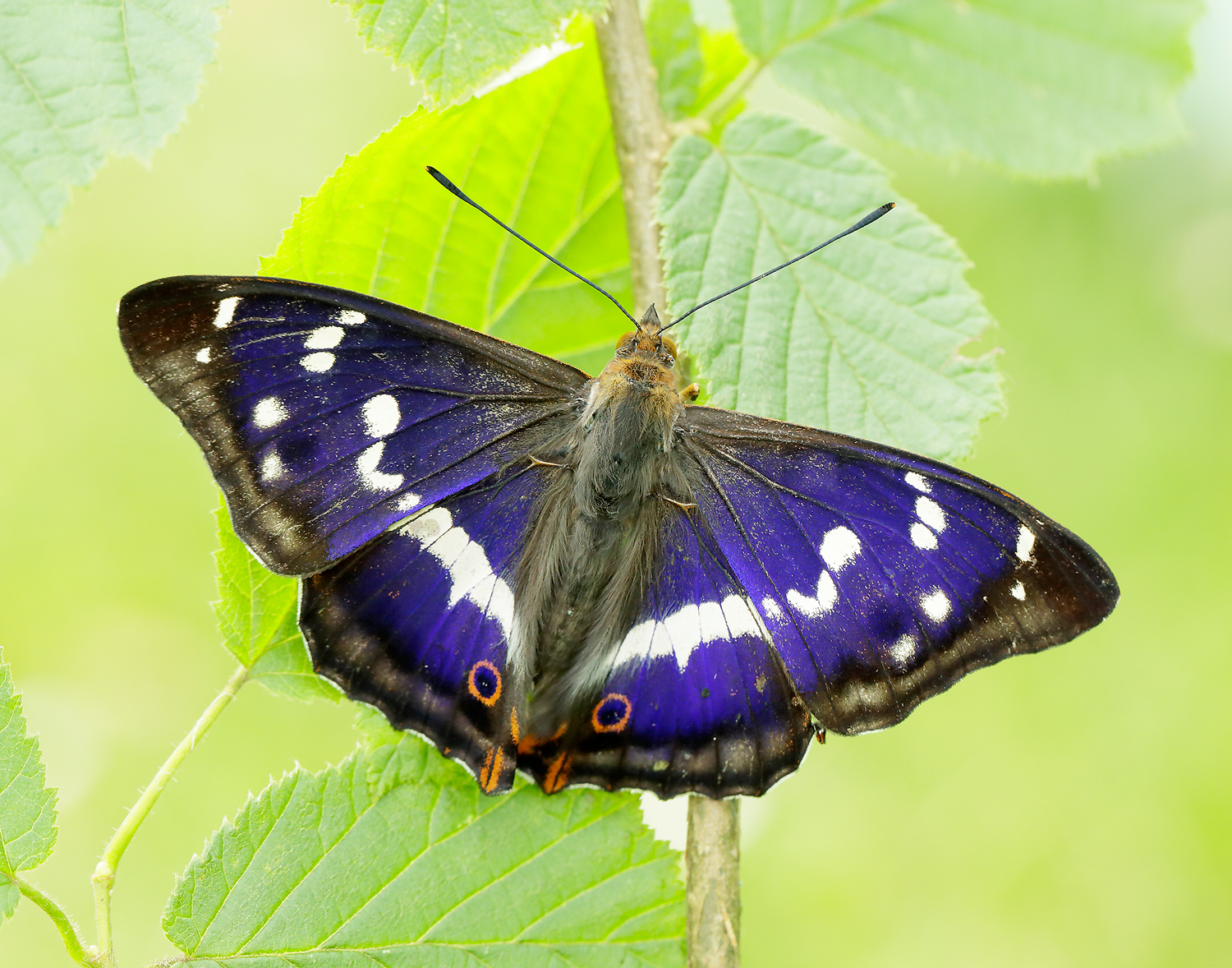
The male has vivid purple wings with striking white lines and orange-ringed eye-spots under the forewing. The females, although not purple, also have vibrant patterning resembling the White Admiral, but are distinguished by an orange-ringed eye-spot under the forewing.
In case their striking colours aren’t enough to grab your attention, they are also massive, with a wingspan up to 84mm. This makes them one of the largest butterflies we have here in Britain.
To spot one, you’ll have to look in southern and central England – although, despite its commanding presence, you might need a pair of binoculars. These magnificent butterflies fly high in the treetops of well-wooded landscapes where they feed on aphid honeydew and tree sap. The adults are extremely elusive and spread out over large areas.
The males occasionally descend to the ground, usually in mid-morning, where they probe for salts either from road surfaces or a bit of poo, in a sort of filthy elevenses ritual.
Females which have already mated may perform the ‘rejection drop’ when approached by a male, slowly floating towards the ground until the male takes the hint and leaves.
As caterpillars, they love to eat willows. Specifically Goat Willow, Grey Willow and Crack Willow.
The Purple Emperor population declined steadily during the twentieth century and is now mostly restricted to some of the larger woods in southern England. Promisingly, there has been a slight growth of populations in some areas in recent years.


Vibes
Each butterfly is scored out of 100 across a set of traits, from how bold and visible it is to how far it travels or how particular it is about where it lives. These scores compare each species with the other butterflies in Britain, helping you see their differences at a glance. Here’s what makes the Purple Emperor special.
Bright colours, bold patterns, and a love of the spotlight. Some butterflies just can’t help showing off.
Fast, or throwing some seriously impressive moves, these butterflies are in a flutter.
Always on guard, ready to hide or defend - these butterflies have self-preservation down to an art.
It’s ok to be a little… well, weird. These butterflies have been certified with the freak factor.
Like Goldilocks, everything has to be just right for these perfectionists.
Hard to spot and even harder to forget, these butterflies are a true one of a kind.
Bold, curious, and ready to explore, these brave butterflies live for the thrill and aren’t afraid to travel.
Weather-resistant, battle-hardened, and built to survive, these butterflies know how to take it on the wing.
Look at those wings! Purple Emperors have a wingspan of up to 84mm, making them one of the largest butterflies in Britain.
Test your knowledge
How can you tempt a male Purple Emperor down from flying high over the woodlands?Purple Emperors feed on aphid honeydew and tree sap, but are also known to probe for salts either from road surfaces or a bit of poo.


Voting has now closed