

Large White
Pieris brassicaeThe Large White is one of the UK’s most familiar butterflies, often seen in gardens, allotments and farmland. Commonly known as the Cabbage White, their caterpillars feed on brassicas such as cabbages and nasturtiums. Females can lay up to 600 eggs at a time, and their populations are boosted by arrivals from continental Europe, sometimes swarming in beautiful clouds of butterflies at the coast.

The butterfly that loves brassicas
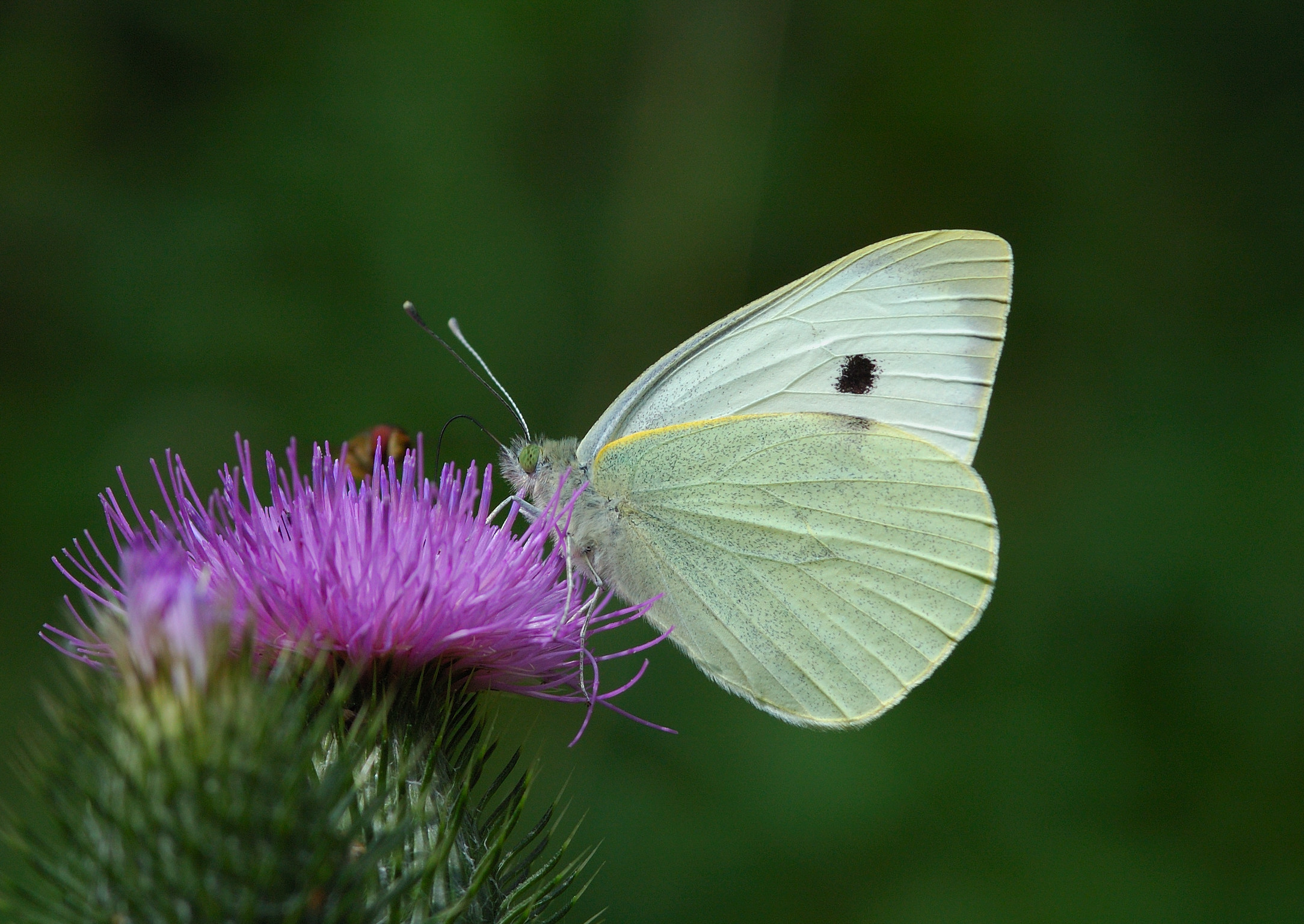
Big, bold and a regular visitor to gardens, the Large White is one of the UK’s most familiar butterflies. Their strong flight and bright white wings make them easy to spot – although it can be challenging to tell it apart from a Small White when they’re whizzing past at speed.
Gardeners in particular know them well, as its caterpillars are a bit partial to cultivated brassicas – buying them off with a sacrificial cabbage is the best way to keep both growers and growing caterpillars happy. Because of this, they’ve earned the nickname ‘Cabbage White’.
Large Whites can lay up to 600 eggs at a time. As caterpillars, they are prone to attack from a parasitoid wasp, which lays its eggs inside the caterpillar’s body. If they’re not munching their way through a cabbage, you might also find them nibbling on nasturtiums.
Large Whites are resident in the UK, but they are also joined by migratory Large Whites from the continent, sometimes resulting in large influxes and clouds of white butterflies, particularly in coastal regions.
They’re really common across the UK. You can spot them in gardens, allotments and farmland.
Vibes
Each butterfly is scored out of 100 across a set of traits, from how bold and visible it is to how far it travels or how particular it is about where it lives. These scores compare each species with the other butterflies in Britain, helping you see their differences at a glance. Here’s what makes the Large White special.
Bright colours, bold patterns, and a love of the spotlight. Some butterflies just can’t help showing off.
Fast, or throwing some seriously impressive moves, these butterflies are in a flutter.
Always on guard, ready to hide or defend - these butterflies have self-preservation down to an art.
It’s ok to be a little… well, weird. These butterflies have been certified with the freak factor.
Like Goldilocks, everything has to be just right for these perfectionists.
Hard to spot and even harder to forget, these butterflies are a true one of a kind.
Bold, curious, and ready to explore, these brave butterflies live for the thrill and aren’t afraid to travel.
Weather-resistant, battle-hardened, and built to survive, these butterflies know how to take it on the wing.
Large Whites can arrive in huge migratory waves from Europe, sometimes forming clouds of white butterflies along UK coasts.
Test your knowledge
Why are Large Whites sometimes called 'Cabbage Whites'?Large White caterpillars feed on brassicas such as cabbage, which is why they are commonly known as 'Cabbage Whites'.


Voting has now closed