

Large Tortoiseshell
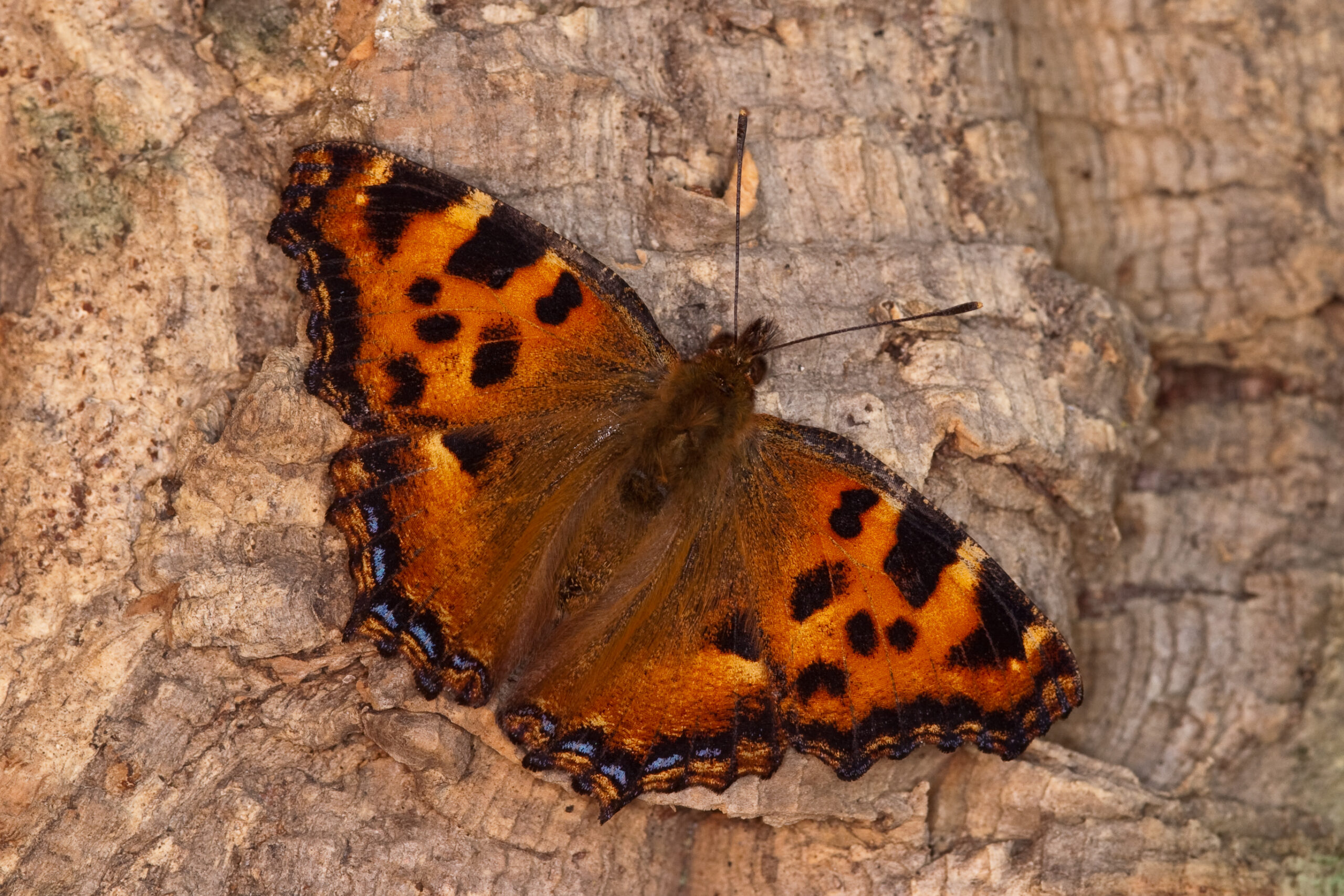
Nymphalis polychlorosThe Large Tortoiseshell is one of the UK’s newest returning butterflies, having recently reappeared after being extinct since the 1960s. Similar to the Small Tortoiseshell but noticeably larger and slightly more muted in colour, they are a rare and exciting sight. Unusually for butterflies, they hibernate through the winter as adults in dark, dry places like tree hollows and outbuildings. Their caterpillars feed on elm, while adults are drawn to rotting fruit. Now slowly re-establishing in southern England, particularly in woodland, orchards and parkland, they remain one of Britain’s most closely watched comeback species.

The beauty making a comeback
The Large Tortoiseshell is the newest resident on the UK butterfly list having returned to the UK this year after going extinct here in the 1960s.
There have been several suggested causes for its prior extinction in the UK – including climate change, parasites, and the effect of Dutch Elm disease on one of its primary food plants.
If your luck’s in, you could be one of the first to spot these rare butterflies down south in woodland orchards and parkland. The adult butterfly has a penchant for rotting fruit, so be sure to keep your eye out amongst the windfall.
Despite its resurgence, this species will continue to be officially classed as Regionally Extinct on the GB Red List until the next update is published.


Vibes
Each butterfly is scored out of 100 across a set of traits, from how bold and visible it is to how far it travels or how particular it is about where it lives. These scores compare each species with the other butterflies in Britain, helping you see their differences at a glance. Here’s what makes the Large Tortoiseshell special.
Bright colours, bold patterns, and a love of the spotlight. Some butterflies just can’t help showing off.
Fast, or throwing some seriously impressive moves, these butterflies are in a flutter.
Always on guard, ready to hide or defend - these butterflies have self-preservation down to an art.
It’s ok to be a little… well, weird. These butterflies have been certified with the freak factor.
Like Goldilocks, everything has to be just right for these perfectionists.
Hard to spot and even harder to forget, these butterflies are a true one of a kind.
Bold, curious, and ready to explore, these brave butterflies live for the thrill and aren’t afraid to travel.
Weather-resistant, battle-hardened, and built to survive, these butterflies know how to take it on the wing.
Large Tortoiseshells love fermented fruit, sometimes feeding on overripe windfalls in orchards and parkland.
Test your knowledge
Where do Large Tortoiseshell butterflies hibernate?Large Tortoiseshells hibernate as adults in dry, sheltered locations such as tree hollows and outbuildings.


Voting has now closed