

Large Skipper
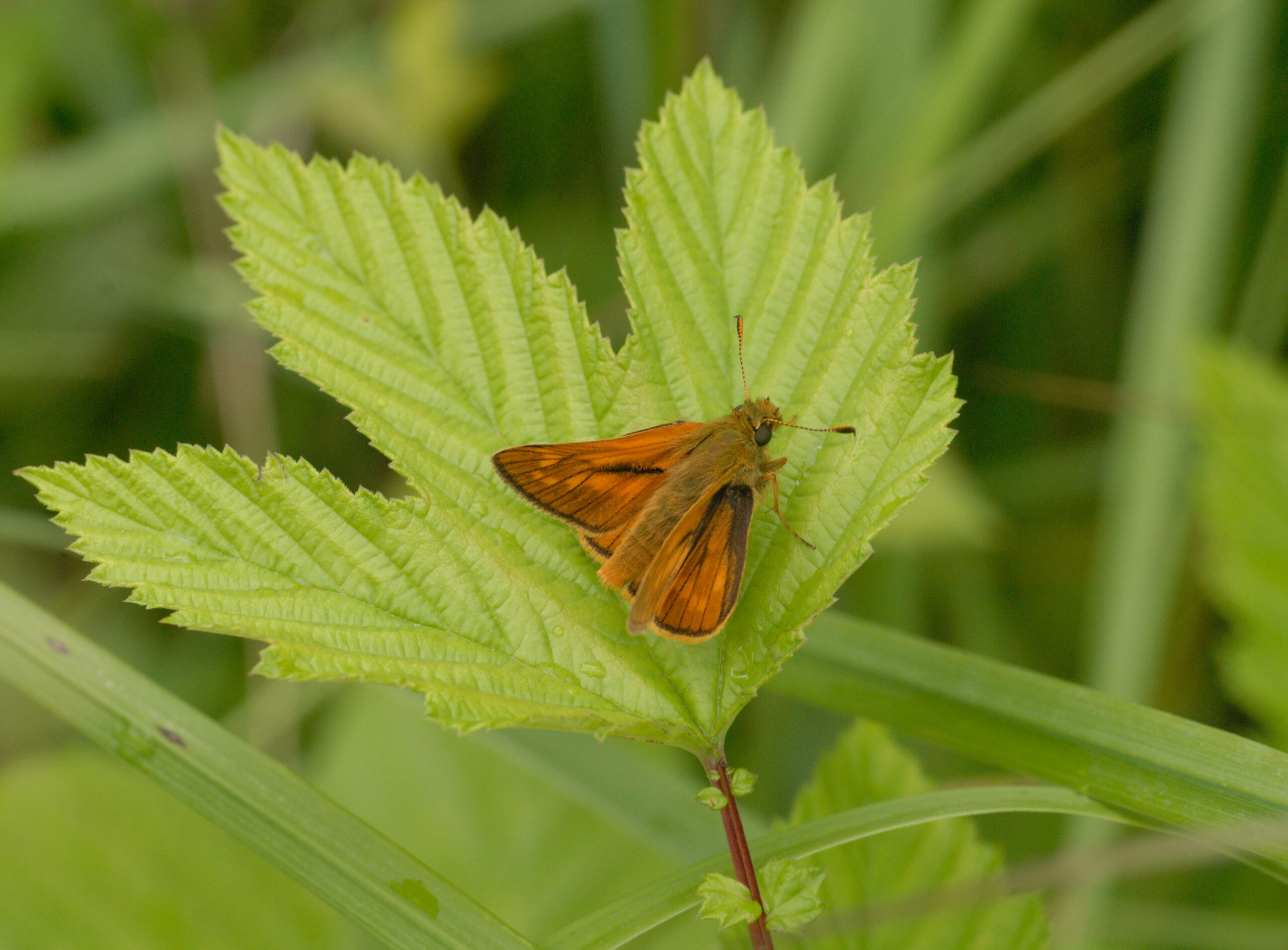
Ochlodes sylvanusThe Large Skipper is an energetic, fast-flying butterfly that darts through tall grasses and often pauses to bask in the sun. Their warm orange-brown wings, with subtle chequered markings, make them easy to spot at rest. As one of the UK’s largest skipper butterflies, they have a long proboscis that lets them feed from a wide range of flowers. Males are territorial and chase rivals in mid-air spirals, while females move more gently near the ground. Found widely across the UK, they thrive in grassy habitats from meadows to parks and woodland edges.

Fighting in the air, chilling in the grass
As the name suggests, the Large Skipper is one of the largest of the UK’s skipper butterflies. They have a particularly long proboscis – a tongue-like appendage which it uses to suck up nectar. This allows the Large Skipper to feed on a wide variety of flowers.
Like the other orange skippers, it holds its wings at an angle behind its body, giving it a very distinctive shape.
Males defend their patch with relish, seeing off other males by spiralling around them mid-air. Females take a more leisurely approach, flitting close to the ground in search of nectar and egg-laying spots.
As caterpillars, they live in rolled up blades of grass for protection. Very cute, right? Their favourite grass is Cock’s-foot, so take a look amongst the blades to see if you can see them.
To find the Large Skipper as an adult, look for areas of tall grass in a range of habitats across England, Wales and southern Scotland. They’re widespread, and like more rural areas such as grassland and woodland edges, as well as urban habitats like parks and church yards, so there’s plenty of opportunity to meet them.


Vibes
Each butterfly is scored out of 100 across a set of traits, from how bold and visible it is to how far it travels or how particular it is about where it lives. These scores compare each species with the other butterflies in Britain, helping you see their differences at a glance. Here’s what makes the Large Skipper special.
Bright colours, bold patterns, and a love of the spotlight. Some butterflies just can’t help showing off.
Fast, or throwing some seriously impressive moves, these butterflies are in a flutter.
Always on guard, ready to hide or defend - these butterflies have self-preservation down to an art.
It’s ok to be a little… well, weird. These butterflies have been certified with the freak factor.
Like Goldilocks, everything has to be just right for these perfectionists.
Hard to spot and even harder to forget, these butterflies are a true one of a kind.
Bold, curious, and ready to explore, these brave butterflies live for the thrill and aren’t afraid to travel.
Weather-resistant, battle-hardened, and built to survive, these butterflies know how to take it on the wing.
Male Large Skippers defend their territory with mid-air spiral chases, turning sunny grasslands into tiny aerial battle zones.
Test your knowledge
What makes the Large Skipper especially good at feeding on flowers?The Large Skipper has a long proboscis that allows them to access nectar from a wide variety of flowers.

Voting has now closed