
Holly Blue
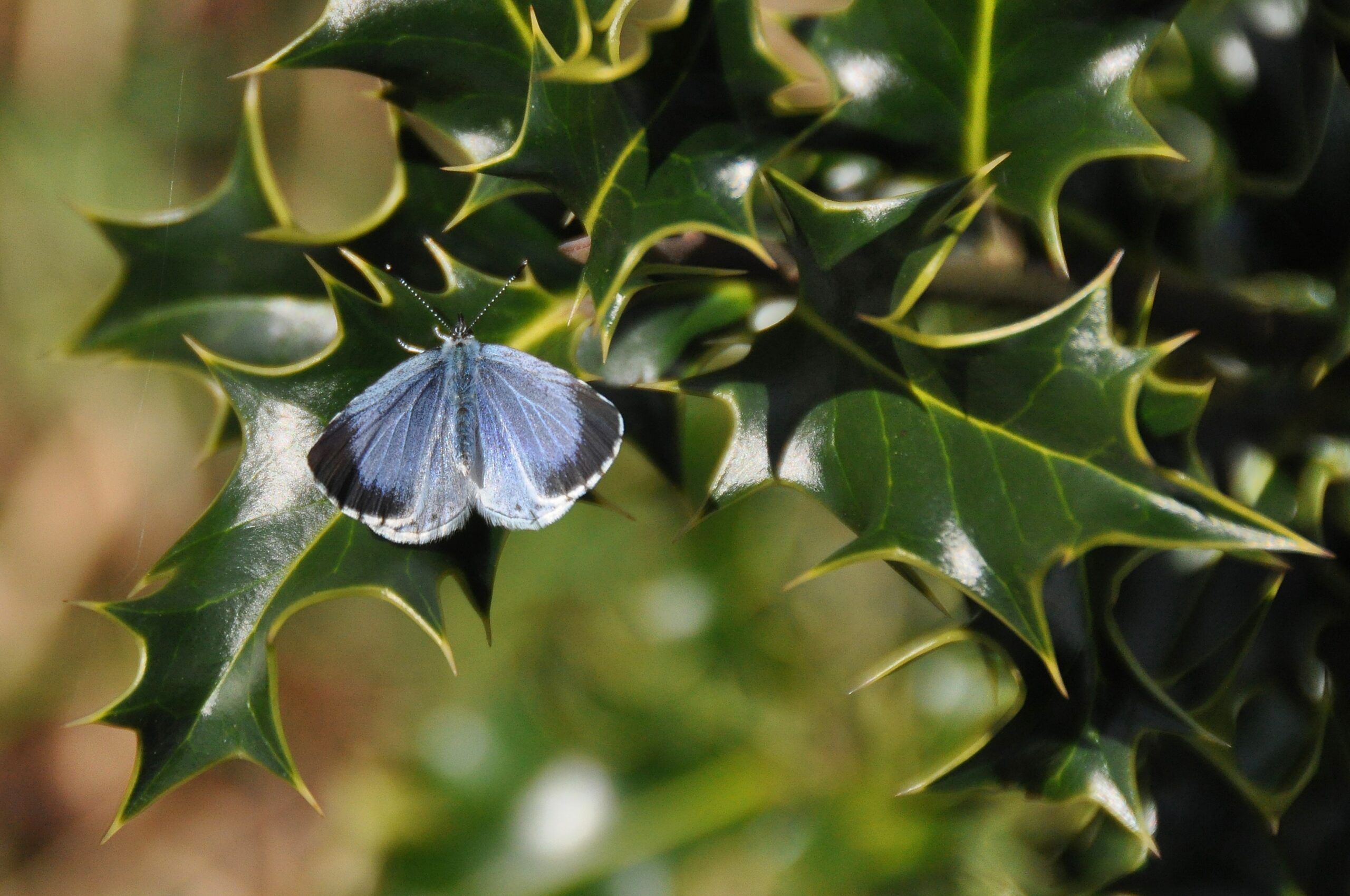
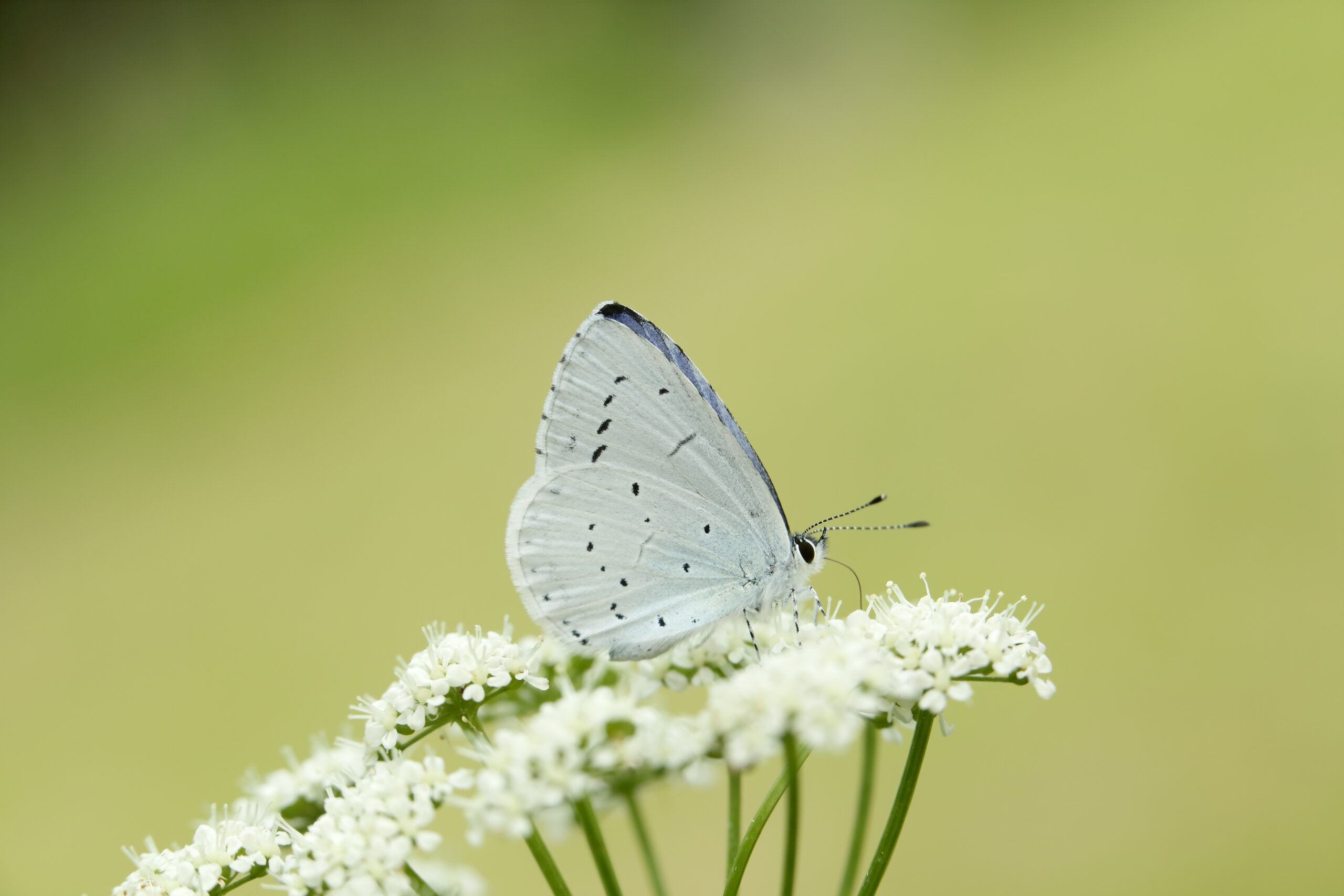
Celastrina argiolusThe Holly Blue is a delicate, dreamy, pale blue butterfly, often seen fluttering high around trees in gardens and parks. Their subtle colouring gives them a soft, almost fairy-like appearance. Unusually, they have two broods each year, with caterpillars feeding on Holly in spring and Ivy in summer. Once found mainly in the south of the UK but now firmly established in the north, their numbers can swing wildly from year-to-year on the fortunes of a parasitoid wasp.

The fairy of our hedgerows
The fragile beauty of the Holly Blue flickers high around trees and shrubs, often going unnoticed as they dance through gardens and parks. Although more muted in colour than the other blue butterflies, the subtlety of their pale blue wings lends them a distinctively fairy-like quality.
Each year, they have two lots of caterpillars to take advantage of two different foodplants – Holly in the spring, Ivy in the summer.
In exchange for a nutrient-rich, sugary secretion, ants will provide the Holly Blue’s caterpillars with some protection from parasites.
As adults, they often fly high around trees where they can find aphid honeydew to eat, but they will come to the ground to feast on minerals in animal poo.
Holly Blue numbers can change dramatically from year-to-year, and this is thought to be due to the impact of a parasitoid wasp, which relies solely on the Holly Blue as a host. The wasp uses its long syringe-like sting to insert a single egg into a living Holly Blue caterpillar. The wasp larva develops within the caterpillar, eventually leading to its demise.
Once mostly found in the south of the UK, the Holly Blue has been spreading north in recent years and is now firmly established in northern areas. They can make many environments their home, and you can find them in gardens, parks, hedgerows and woodlands.

Vibes
Each butterfly is scored out of 100 across a set of traits, from how bold and visible it is to how far it travels or how particular it is about where it lives. These scores compare each species with the other butterflies in Britain, helping you see their differences at a glance. Here’s what makes the Holly Blue special.
Bright colours, bold patterns, and a love of the spotlight. Some butterflies just can’t help showing off.
Fast, or throwing some seriously impressive moves, these butterflies are in a flutter.
Always on guard, ready to hide or defend - these butterflies have self-preservation down to an art.
It’s ok to be a little… well, weird. These butterflies have been certified with the freak factor.
Like Goldilocks, everything has to be just right for these perfectionists.
Hard to spot and even harder to forget, these butterflies are a true one of a kind.
Bold, curious, and ready to explore, these brave butterflies live for the thrill and aren’t afraid to travel.
Weather-resistant, battle-hardened, and built to survive, these butterflies know how to take it on the wing.
Chosen By

My vote is for the charming Holly Blue.
I just adore seeing these little blue butterflies fluttering around my garden
Chosen By
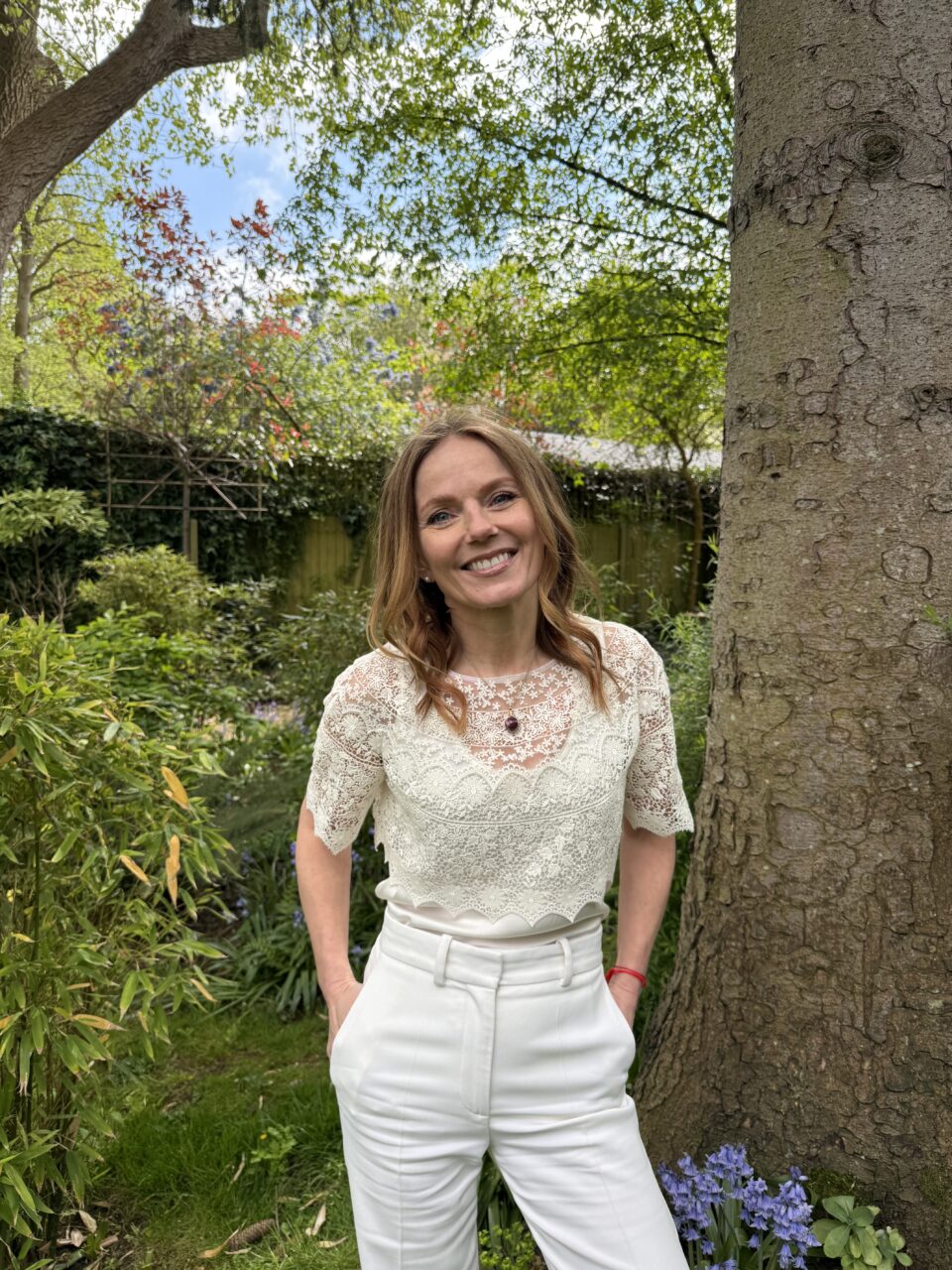
Who doesn’t smile when they see a butterfly? They’re so uplifting aren’t they! I’m rooting for the beautiful Holly Blue. How about you?
Holly Blue numbers can boom or crash each year due to a tiny parasitoid wasp that relies entirely on them.
Test your knowledge
Which plants do Holly Blue caterpillars feed on during the year?Holly Blue caterpillars use Holly in spring and switch to Ivy in summer for their second brood.


Voting has now closed