

Common Blue
Polyommatus icarusThe Common Blue is one of the UK’s most widespread butterflies, found in grasslands, meadows and coastal areas. Males shimmer bright blue, while females vary in colour across the UK, from mostly brown with hints of blue in England to more vivid blue forms in Scotland and Northern Ireland. They thrive in sunny, sheltered spots rich in flowers. Females carefully choose egg-laying sites by testing plants with their feet. With the ability to produce multiple generations each year, they are a familiar and adaptable presence across the UK.

Common by name… and also pretty common by nature
A familiar sight in meadows and along coastal paths, the Common Blue is anything but boring.
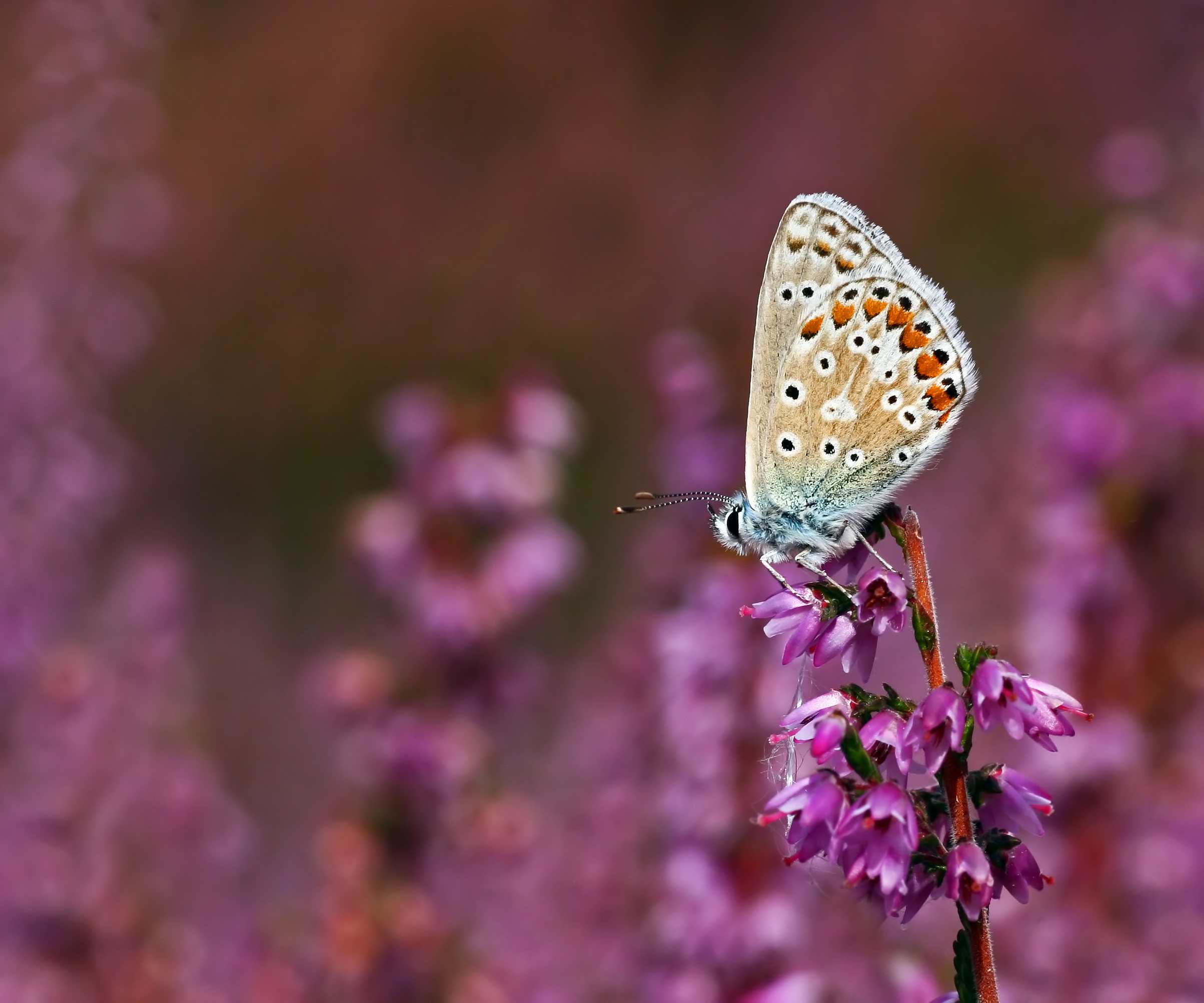
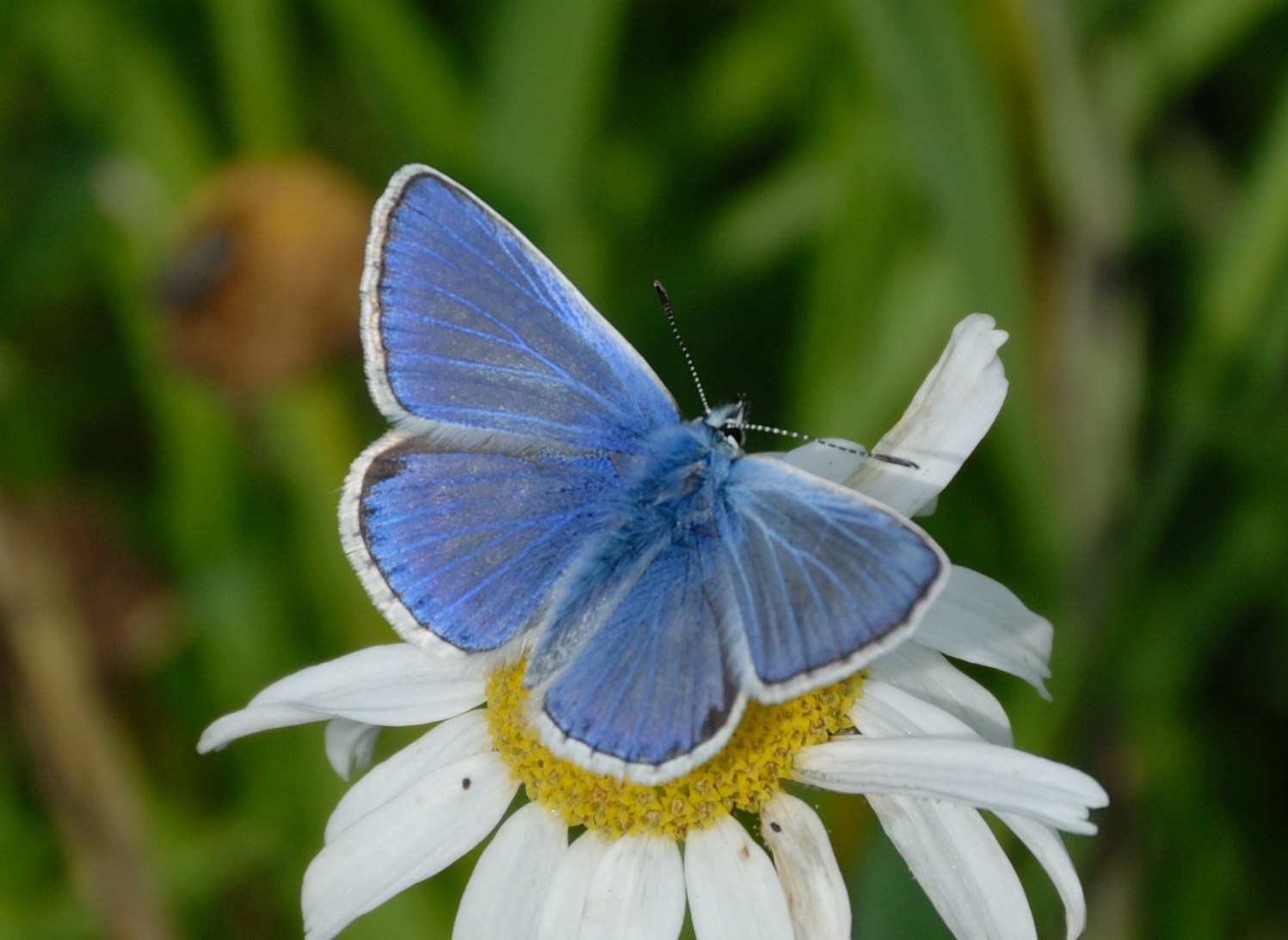
Males shimmer bright blue, while females are more understated but equally beautiful.
The colouring of the females varies quite a lot depending on their location. In England, they more often have brown wings with a speckling of blue across the body and base of the wings. The Scotland and Northern Ireland editions, though, are closer to the males, taking on a more uniform blue.
As the name suggests, It is one of the most widespread blue butterflies in the UK, in part down to their ability to deliver two or even three generations in a single year.
Like many other blues, the Common Blue is a sun lover, and the best way to spot them is to find a sunny, sheltered spot with lots of flowers. They especially like to nectar on Common Bird’s-foot Trefoil, Bugle, knapweeds and ragworts.
The female Common Blue will drum her feet on low-growing plants to find one suitably nutritious to lay an egg on.
You’ll find them across the UK in grasslands, meadows, coastal areas and even waste ground – they aren’t picky.

Vibes
Each butterfly is scored out of 100 across a set of traits, from how bold and visible it is to how far it travels or how particular it is about where it lives. These scores compare each species with the other butterflies in Britain, helping you see their differences at a glance. Here’s what makes the Common Blue special.
Bright colours, bold patterns, and a love of the spotlight. Some butterflies just can’t help showing off.
Fast, or throwing some seriously impressive moves, these butterflies are in a flutter.
Always on guard, ready to hide or defend - these butterflies have self-preservation down to an art.
It’s ok to be a little… well, weird. These butterflies have been certified with the freak factor.
Like Goldilocks, everything has to be just right for these perfectionists.
Hard to spot and even harder to forget, these butterflies are a true one of a kind.
Bold, curious, and ready to explore, these brave butterflies live for the thrill and aren’t afraid to travel.
Weather-resistant, battle-hardened, and built to survive, these butterflies know how to take it on the wing.
Common Blues can produce up to three generations in a single year when conditions are right.
Test your knowledge
How do female Common Blues choose where to lay their eggs?Female Common Blues drum their feet on plants to check if they are suitable for laying eggs.


Voting has now closed