

Chalk Hill Blue
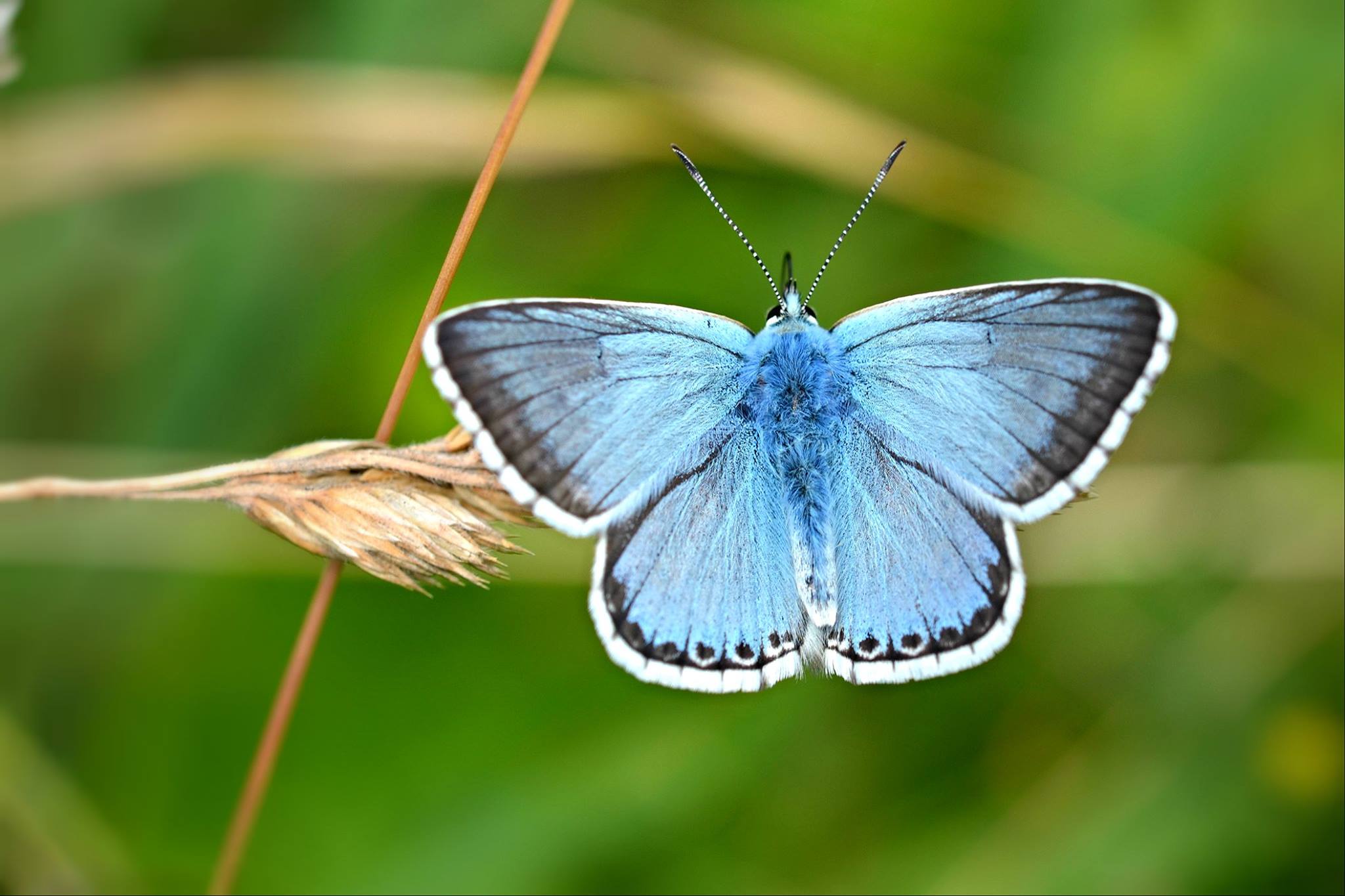
Polyommatus coridonChalk Hill Blues are pale, delicate butterflies, often seen in fluttering clouds, romantically drifting low over sunny chalk grasslands. Males in particular are full of motion, often gathering in puddling groups to absorb minerals from damp ground. Females, meanwhile, are more reserved and stay closer to home. Like many blues, their caterpillars have cut a cunning deal with ants.

A romantic grassland wanderer
If you visit sunny chalk hills in summer, you might spot clouds of pale blue butterflies fluttering low over the grass – Chalk Hill Blues.
Like several other blues, their caterpillars are looked after by ants, which protect them from predators in exchange for sweet secretions.
Set alongside the Adonis, with its electric blue wings, Chalk Hills are more subtle by comparison. Males are a soft silvery-blue, while females are chocolate brown with a blue dusting, making for a strikingly contrasting pair.
The males are full of energy, flitting about looking for nectar and a potential mate. Males also often gather in ‘puddling’ groups to drink minerals from damp ground and animal dung.
The females, however, are more sedentary, spending less time flying and preferring to stay closer to home.
Together, their colonies can number in the hundreds and sometimes even thousands.
Though the butterfly has been in retreat in places, you’ll find Chalk Hill Blues throughout chalk and limestone grasslands in most of southern England, apart from the far South West.


Vibes
Each butterfly is scored out of 100 across a set of traits, from how bold and visible it is to how far it travels or how particular it is about where it lives. These scores compare each species with the other butterflies in Britain, helping you see their differences at a glance. Here’s what makes the Chalk Hill Blue special.
Bright colours, bold patterns, and a love of the spotlight. Some butterflies just can’t help showing off.
Fast, or throwing some seriously impressive moves, these butterflies are in a flutter.
Always on guard, ready to hide or defend - these butterflies have self-preservation down to an art.
It’s ok to be a little… well, weird. These butterflies have been certified with the freak factor.
Like Goldilocks, everything has to be just right for these perfectionists.
Hard to spot and even harder to forget, these butterflies are a true one of a kind.
Bold, curious, and ready to explore, these brave butterflies live for the thrill and aren’t afraid to travel.
Weather-resistant, battle-hardened, and built to survive, these butterflies know how to take it on the wing.
Chalk Hill Blues can gather in huge colonies, sometimes numbering in the thousands on sunny slopes.
Test your knowledge
What is a common behaviour of male Chalk Hill Blues?Male Chalk Hill Blues often form 'puddling' groups, where they drink minerals from damp ground to help with reproduction and energy.


Voting has now closed